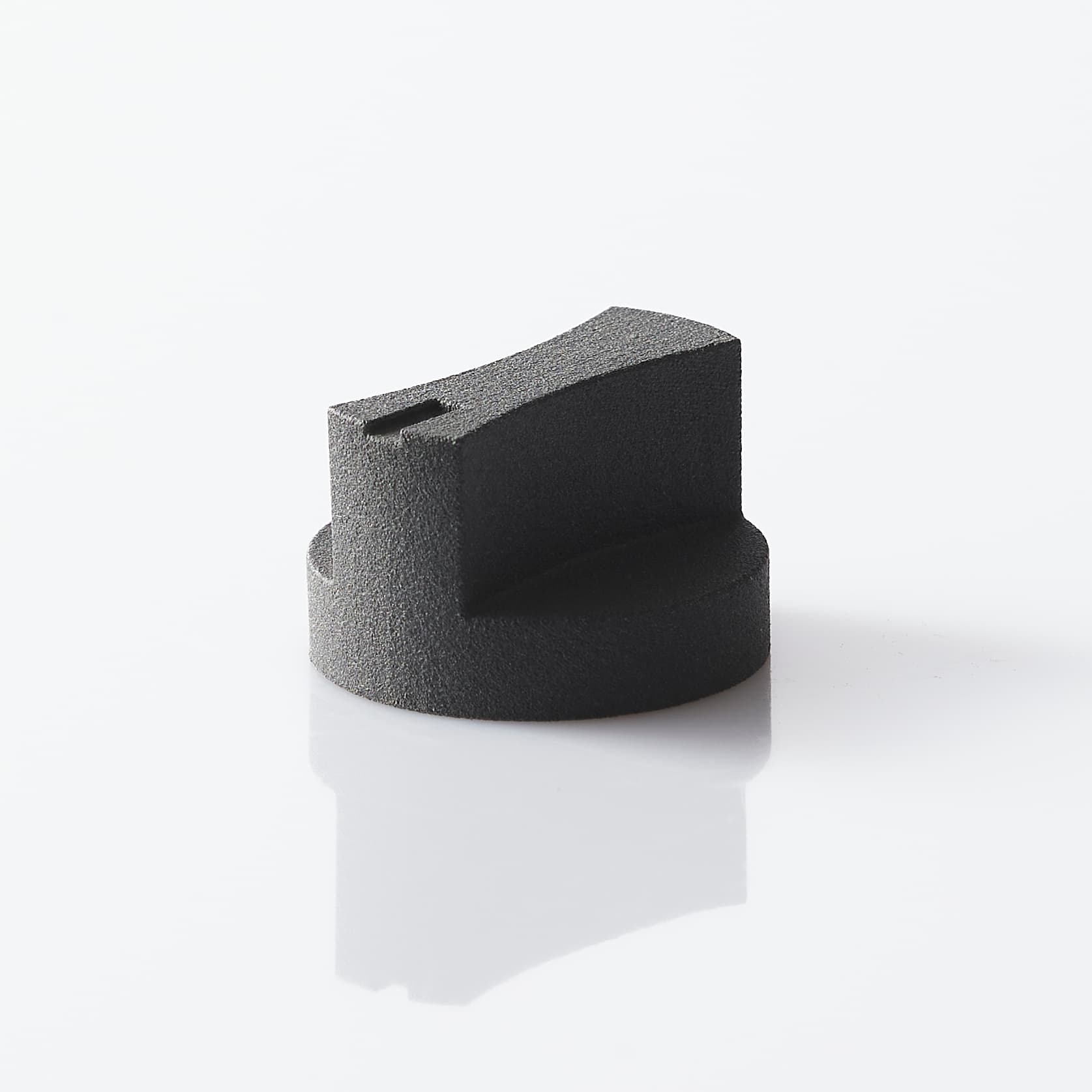
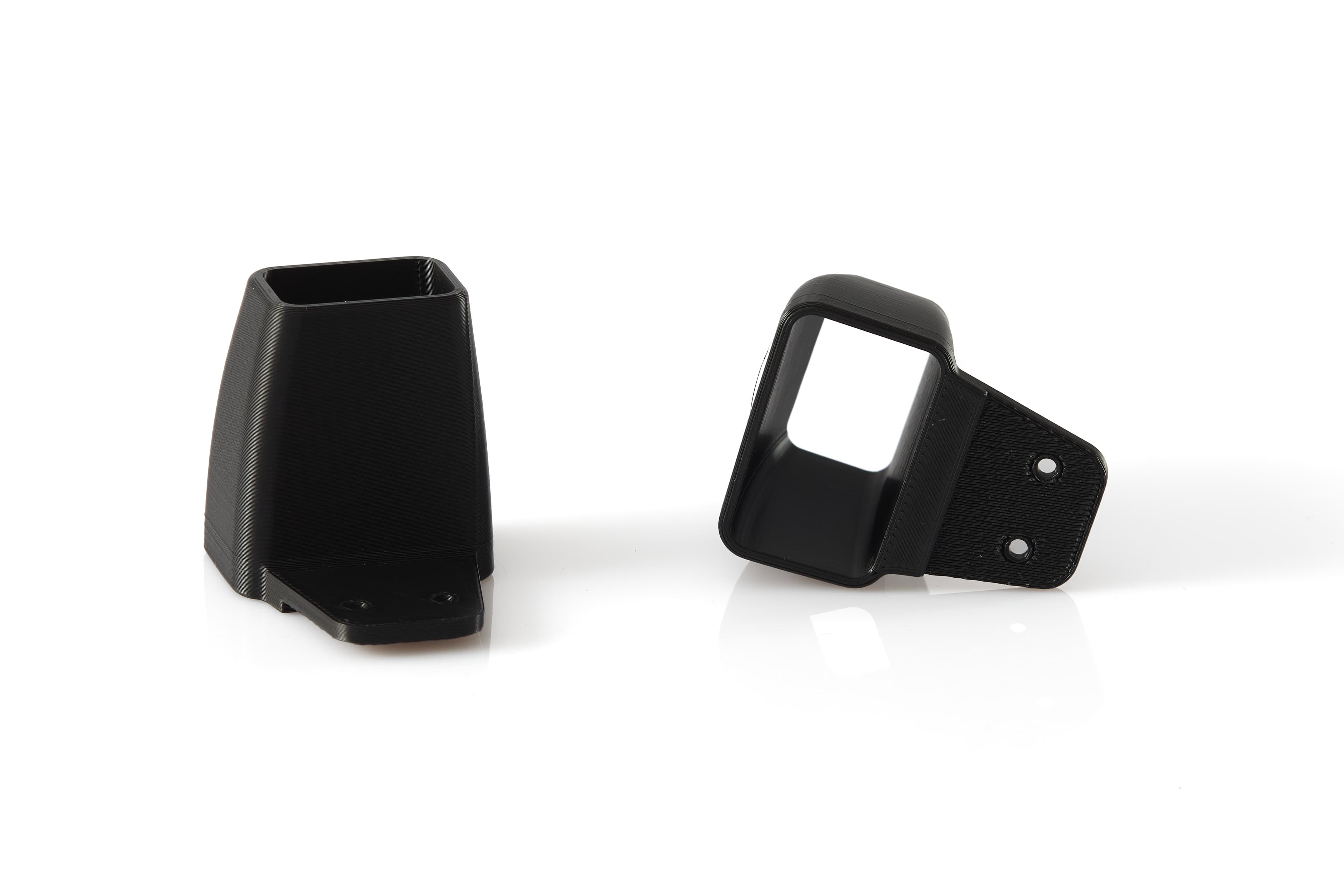
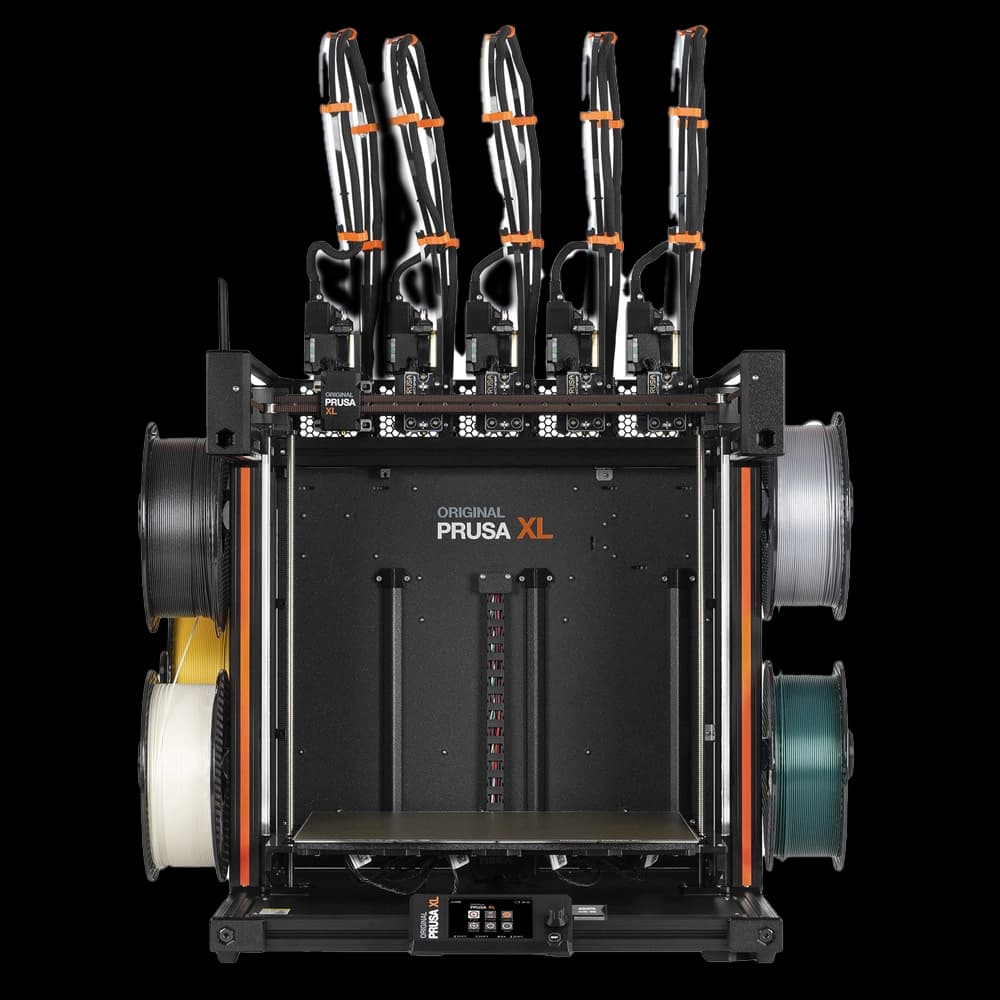
A component with internal geometries, a lightweighted bracket or a pre-series to validate no longer has to wait weeks between tooling, external machining and corrections. The six advantages of additive manufacturing directly affect how technical offices, R&D and product designers turn a CAD file into a part that is verifiable, functional and ready for the field.
Industrial 3D printing does not automatically replace every conventional process. For very high volumes, extremely tight tolerances or specific materials, CNC, moulding and casting often remain the most suitable choice. But for functional prototypes, tooling, small runs and complex components, additive reduces the steps and constraints that slow down development.
The six advantages of additive manufacturing for industry
1. Reduce the time from CAD to physical part
The first advantage is operational: production starts from the digital model, without requiring moulds, dedicated jigs or special tools. After the file check, the component can enter the production flow, move on to post-processing and reach the department that has to test or install it.
This shortens the development cycle especially when the project is still evolving. A change to a connection, a fixing seat or a thickness does not involve revising expensive tooling: you update the CAD, check manufacturability again and make the next version.
The time saved is not only about printing. The reduction in handovers between suppliers, waits for procurement and approvals needed to start traditional processes also counts. A flow managed from file to finished part makes timing and responsibilities clearer.
2. Iterate without tying up budget in tooling
In the prototyping phase, the relevant cost is not only the price of a single part. It is the cost of discovering late an assembly error, an interference, an unexpected flexibility or an unsuitable material choice. Additive manufacturing makes it possible to put a real object in the team's hands before committing resources to tools and more rigid production.
The designer can compare several variants of the same component, assess the ergonomics of a shell, check the routing of wiring or try different stiffening solutions. In these cases, producing two or three targeted iterations is often more efficient than perfecting a model on screen alone for a long time.
The advantage depends on the discipline of the process. Iterating quickly does not mean printing without criteria: each revision should have a measurable objective, such as reducing weight, improving assembly, increasing the strength of a critical zone or simplifying maintenance.
3. Design geometries that other processes limit
Internal channels, lattices, undercuts, organic walls and the consolidation of several elements into a single part are concrete possibilities of additive manufacturing. They are not an aesthetic exercise: if applied with care, they can eliminate joints, reduce purchased components and improve the function of the part.
A typical example is an assembly jig. Instead of building it from many machined parts fixed together, you can design a single body with stops, references, insert seats and lightened zones. The result can reduce assembly time and the possibility of error, while keeping the functional areas where precision is needed.
Geometric freedom does, however, require precise design rules. Minimum thicknesses, print orientation, the ability to evacuate powder in bed-based technologies, the need for supports and the anisotropic behaviour of the material all influence the result. A good additive component comes from a dialogue between geometry, process and final function.
4. Lighten and optimise without sacrificing function
For the same function, a part does not necessarily have to be solid or made of simple volumes. Additive makes it possible to remove material in the least stressed zones, introduce targeted ribs and work on internal structures when the use case justifies it.
This is relevant for robotic end-effectors, manually handled tooling, portable devices and applications where mass and envelope affect performance, consumption or operator safety. Lightening a part can mean reducing the inertia of a system or making a tool used many times during the shift more practical.
Optimisation should not be assessed in grams alone. A more complex geometry may require more preparation time, dedicated finishes or additional dimensional checks. The point is to obtain the best balance between performance, manufacturability, cost and delivery time, not to pursue the most elaborate shape possible.
5. Produce small runs with controlled risk
For limited quantities, injection moulding and other tooling-based processes can impose upfront costs that are hard to absorb. Additive manufacturing makes it possible to produce small runs without spreading the cost of a mould over an insufficient number of parts.
It is a concrete solution for pilot launches, market validation, low-turnover spare parts, customised configurations and bridge production before conventional industrialisation. The same geometric platform can generate variants with different codes, seats, dimensions or markings, without starting a new supply chain for each version.
The economics have a threshold that varies with material, volume, dimensions and finishing requirements. As quantities grow, the total cost of additive needs to be compared with the production alternatives. The value of additive, in many projects, lies precisely in allowing an informed decision before committing to large numbers.
6. Integrate materials, finishes and traceability into the process
An industrial part is rarely just "printed". It may require cleaning, support removal, bead blasting, dyeing, coatings, assembly of inserts or identification marking. Managing these operations as part of the same process prevents a technically correct part from becoming unusable because of a neglected final detail.
The choice of material is just as decisive. PA12 is often specified for strong, stable components produced with SLS; TPU meets needs for elasticity and absorption; MSLA engineering resins can offer detail, stiffness or specific characteristics for targeted applications. FDM retains a useful role when size, speed and thermoplastic materials guide the choice.
Traceability deserves attention too. Codes, revision numbers, serial numbers and technical references can be integrated through laser engraving, making it easier to identify components, batches and configurations. For tooling, spare parts and parts distributed in the field, this step reduces ambiguity during inspection, maintenance and replacement.
When additive manufacturing offers the most value
The useful question is not whether 3D printing is always cheaper. It is understanding what production problem the component has to solve. If you need to validate a geometry, shorten a development cycle, avoid premature tooling, integrate functions or produce a few units with controlled variants, additive is often a rational choice.
To obtain a repeatable result, the file must be assessed before production: thin geometries, functional tolerances, mating features, orientation, material and finish must be consistent with the intended use. Doppialinea works on this step with a single technical point of contact, from model checking to delivery of the finished component.
The most effective way to start is with a part that today takes too much time, too many operations or too many revisions. A well-defined CAD model, a clear functional requirement and a reasoned choice of material make it possible to turn additive manufacturing from an experimental alternative into a concrete tool for deciding and producing better.