SLS 3D printing

Selective Laser Sintering — prototypes and production runs in PA12 and TPU

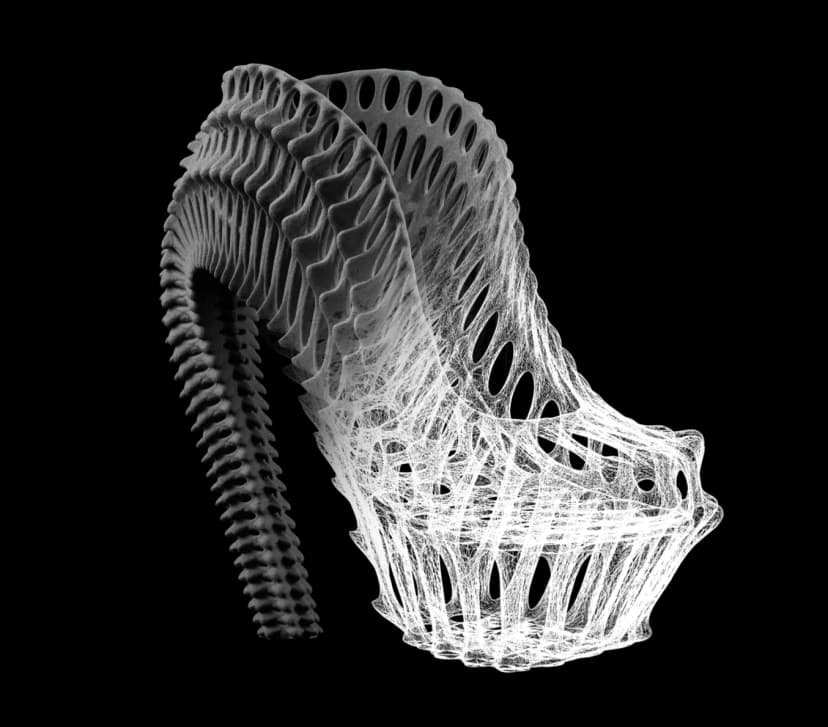
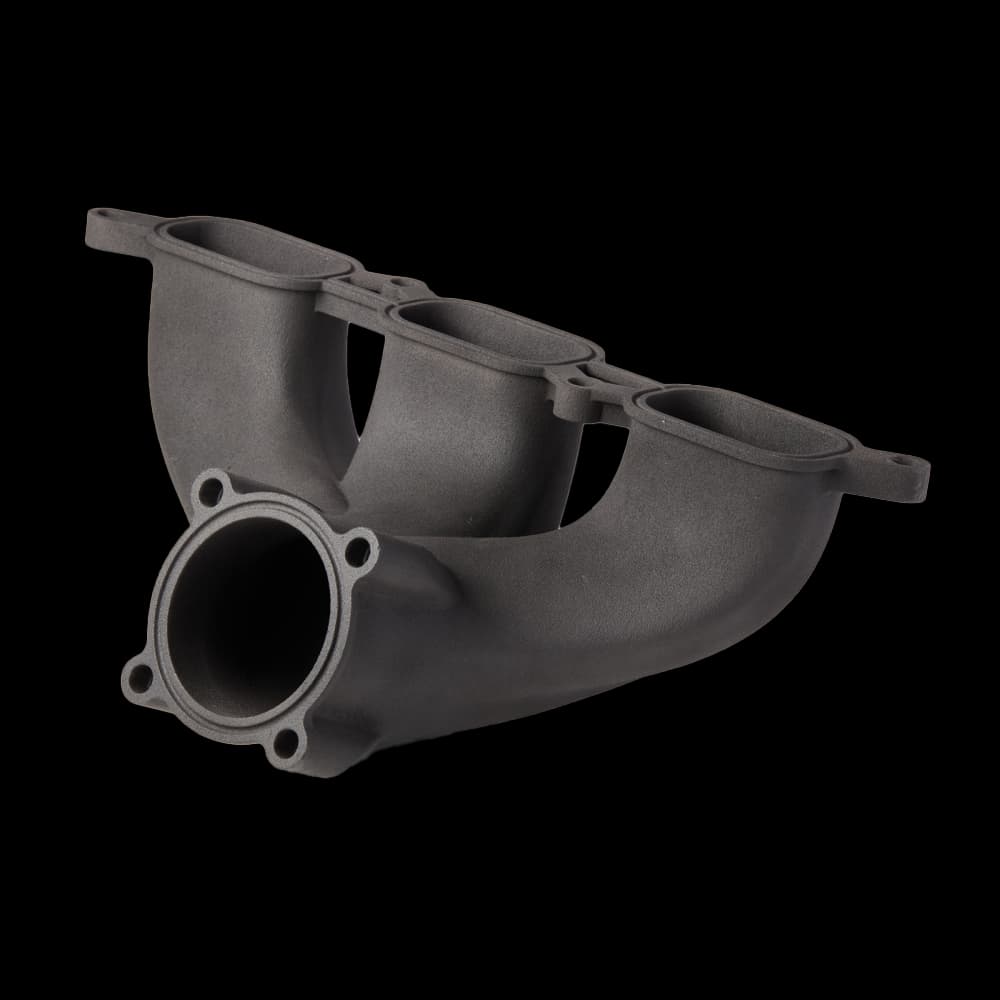
Component 3D-printed by Doppialinea using SLS technology

SLS technology makes it possible to produce strong, durable and complex components without supports, with maximum precision. Ideal for functional prototypes and small-batch production, it delivers consistent quality and repeatability.

File preparation

From digital
to physical precision.

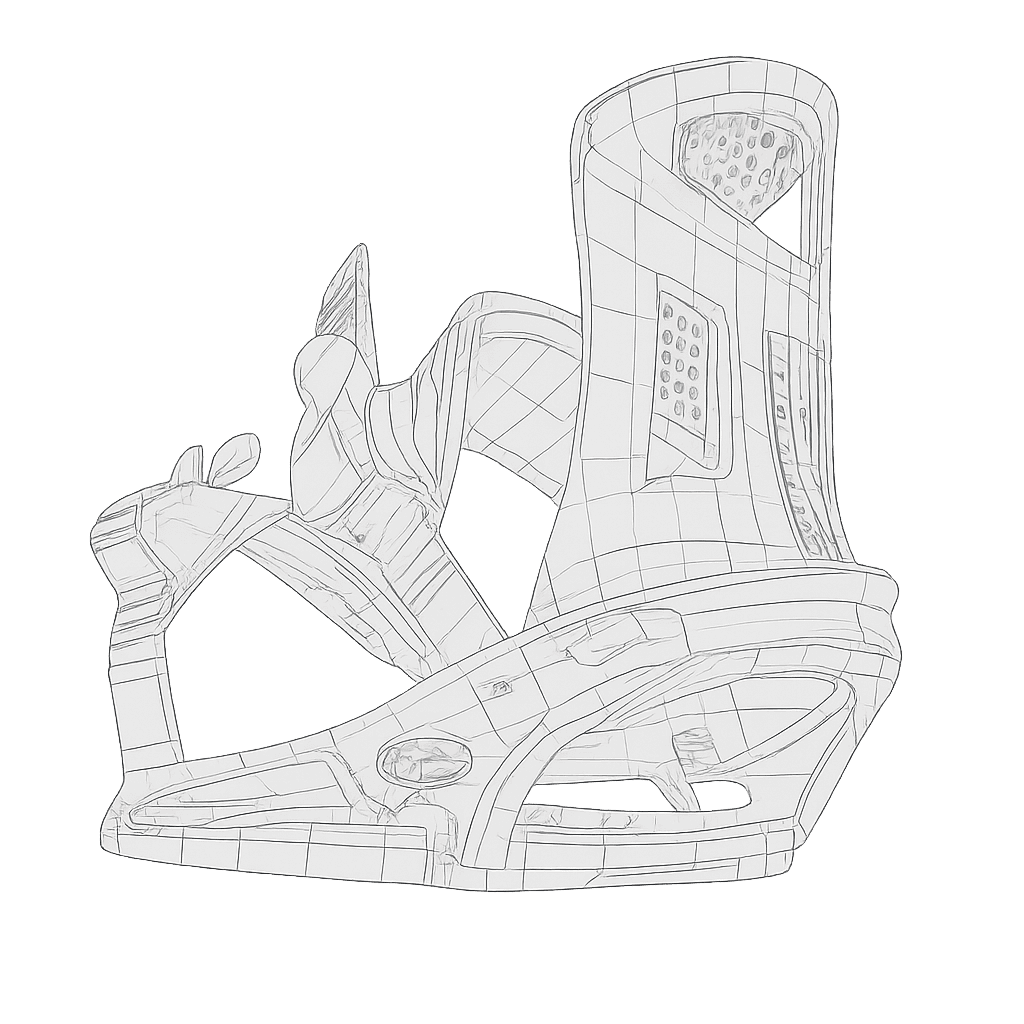
Every part starts from a 3D model. During preparation, we optimise orientation, density and structure to achieve perfect results in the SLS process.

Wireframe CAD model

Process

Hold the technology
in your hands.

Hand holding an SLS component

Selective laser sintering (SLS) brings every component to life, ensuring strength and precision in every detail.From powder to product, a solid and reliable process.

Isotropic and anisotropic

In SLS, the part is strong in every direction.

An SLS part is nearly isotropic: sintered powder gives similar properties along X, Y and Z. It can take loads in any direction.

XY along the layers · Z between the layers

FDM · filament

Anisotropic

The part is built layer by layer. Along the layers (XY) it is strong; across the layers (Z), interlayer adhesion is the weak point.

PA6-CF: tensile strength 109 MPa along the layers, 54 MPa between the layers (Polymaker datasheet).

We orient the part in the machine so that the load runs along the layers.
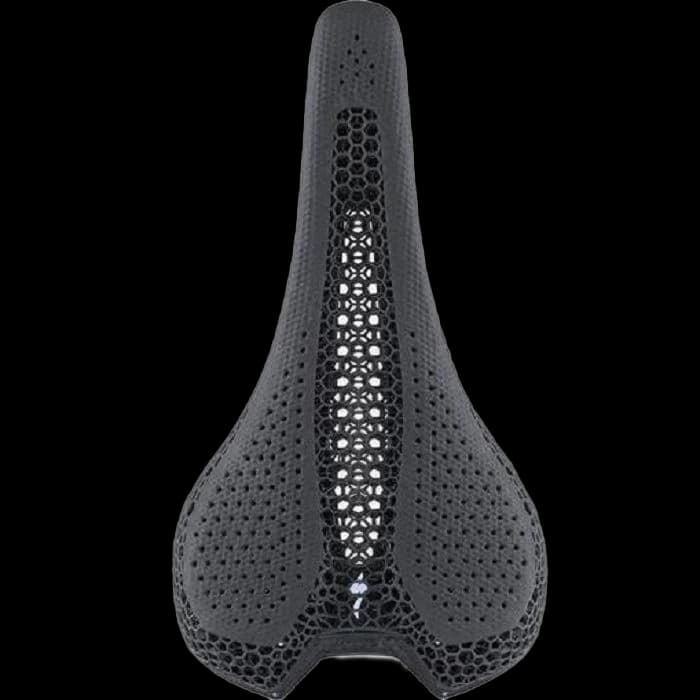
XY along the layers · Z between the layers

SLS · powder

Nearly isotropic

The powder is fused throughout the volume, with no deposited filament: properties are very similar in every direction.

PA12: same tensile strength (50 MPa); slightly lower elongation at break in Z (6% vs 11%), Formlabs datasheet.

The part can be oriented as needed for accuracy and to fit more parts in one build.

XY along the layers · Z between the layers

MSLA · resin

Isotropic

The resin layers bond chemically to one another during curing: the part behaves like a single block.

Resins behave the same in all directions after full curing.

Ideal for fine detail; less impact-resistant than nylon and composites.

Precision,
from every angle.

0.3 mm

Dimensional accuracy

PA12 Powder

Mechanical strength

SLS component

Bead-blasted finish

Uniform, matt texture

TPU 90A

Elasticity and flexibility

Every component is designed and made to deliver maximum precision, strength and an impeccable surface finish. SLS printing makes it possible to achieve complex geometries without supports and consistent performance on every part produced.

What you can do with SLS.

Choose your sector: we’ll show you the applications and the right material.

Select a sector

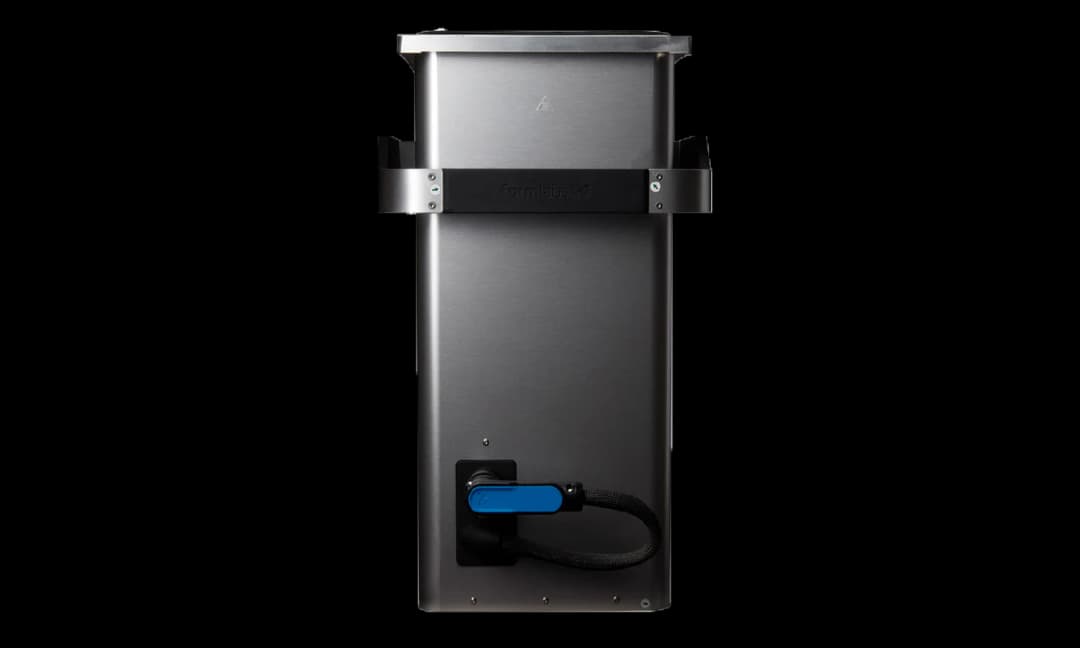
Fuse 1+ 30W build chamber

Build volume

165 × 165 × 300 mm

Typical tolerances

± 0.3% (± 0.3 mm)

Layer height

110 μm for sharp details and uniform surfaces

Productivity

Production runs made to order and pre-production batches

🧭 Design guide – SLS

Optimise the design of your components for selective laser sintering. Click each section to view the recommended parameters, technical images and design notes based on the Formlabs Fuse guidelines.

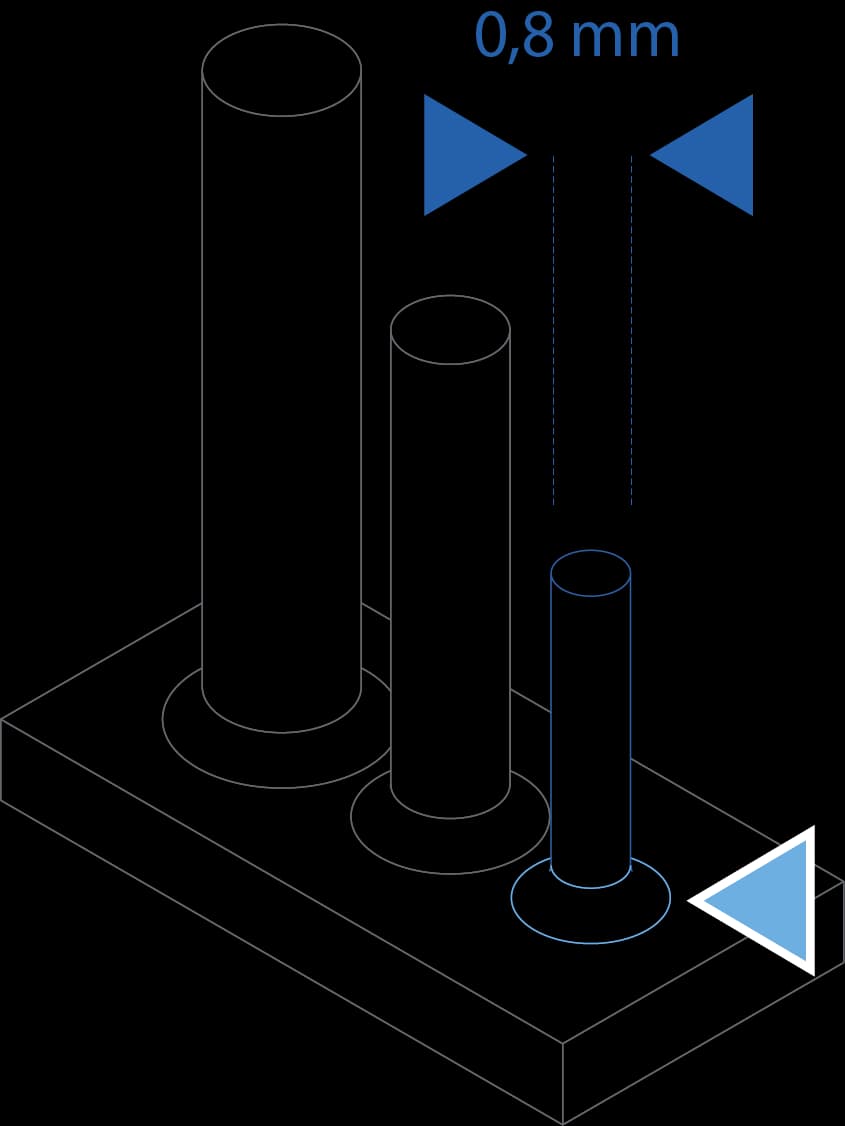
Minimum pin diameter

≥ 0.8 mm

Minimum pin diameter

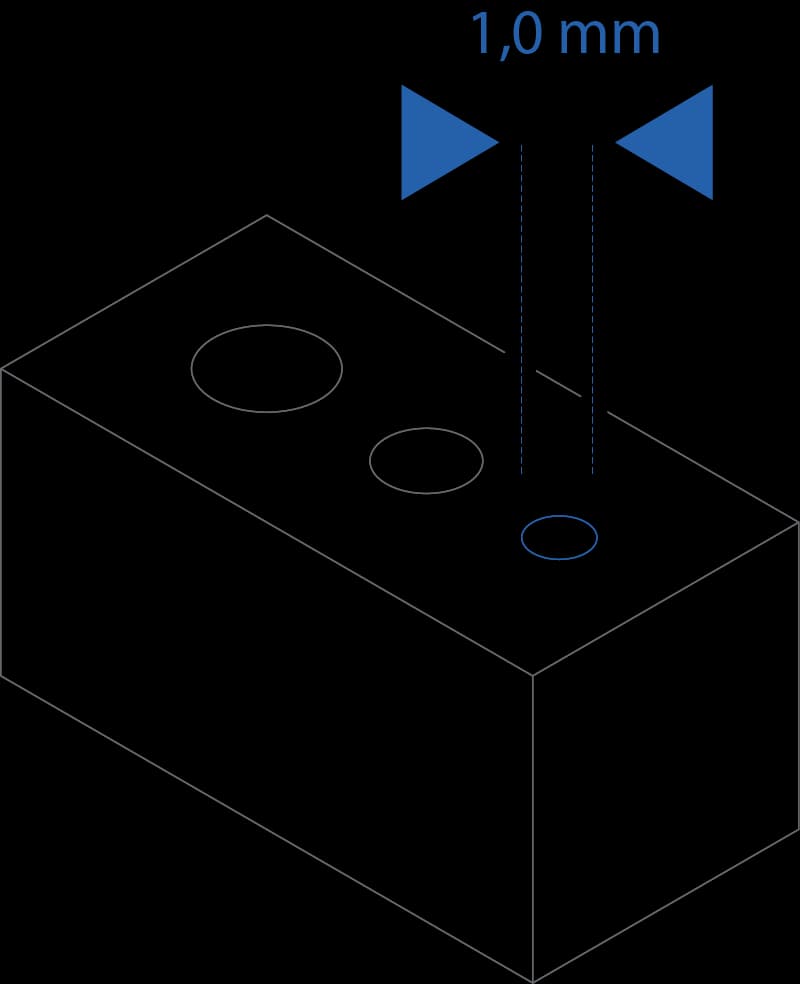
Minimum hole diameter

≥ 1.0 mm

Minimum hole diameter

Minimum wall thickness without supports

Vertical walls 0.6 mm / horizontal 0.3 mm

Minimum wall thickness without supports

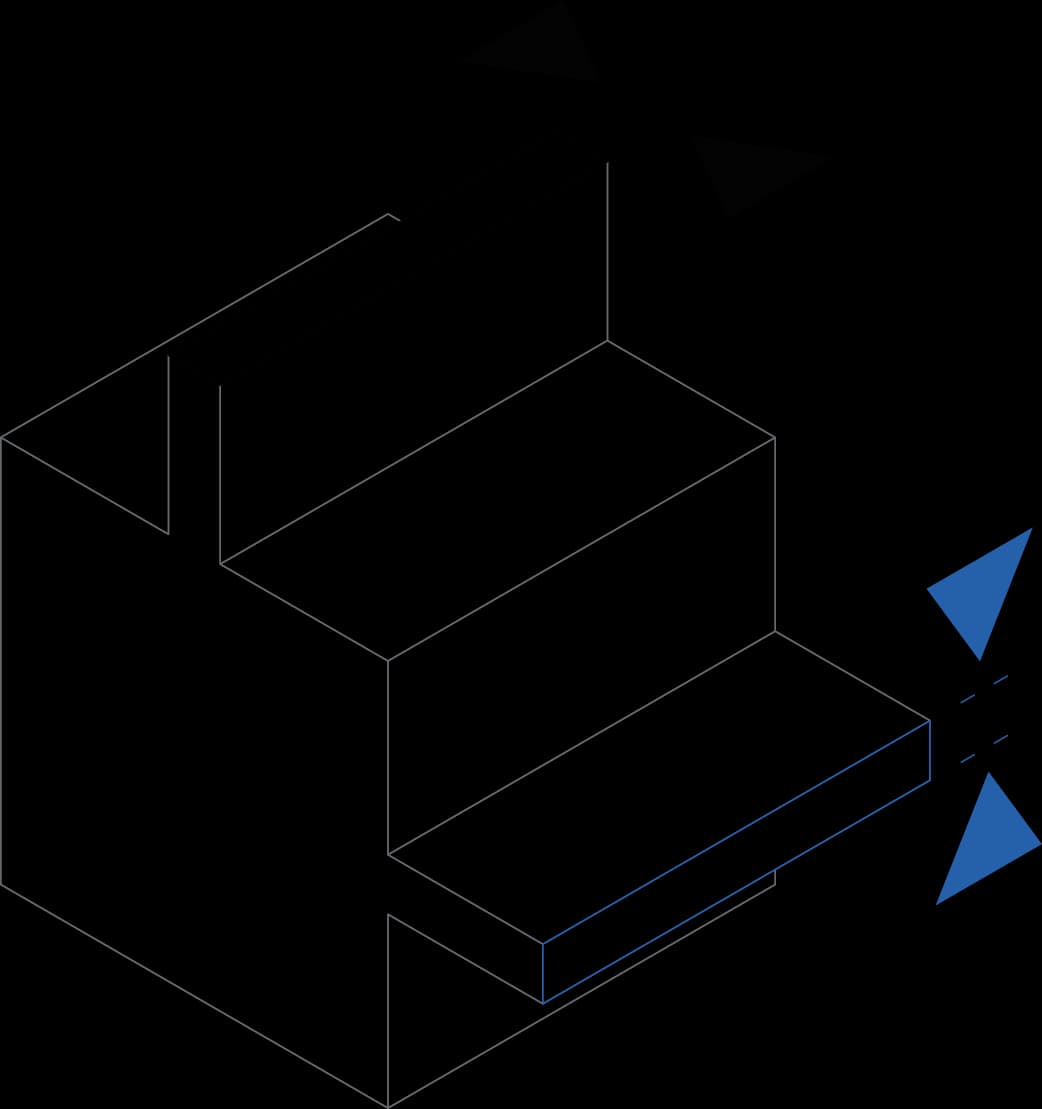
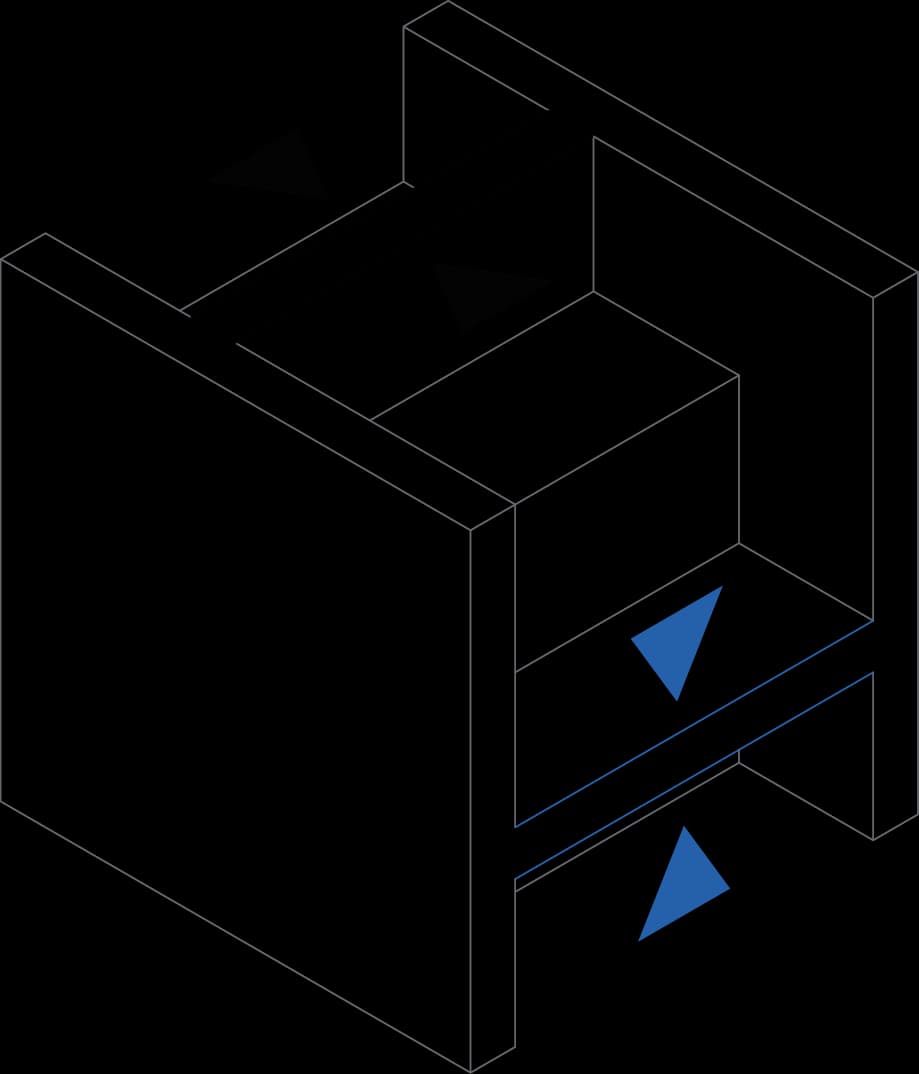
Minimum wall thickness with supports

≥ 0.7 mm recommended

Minimum wall thickness with supports

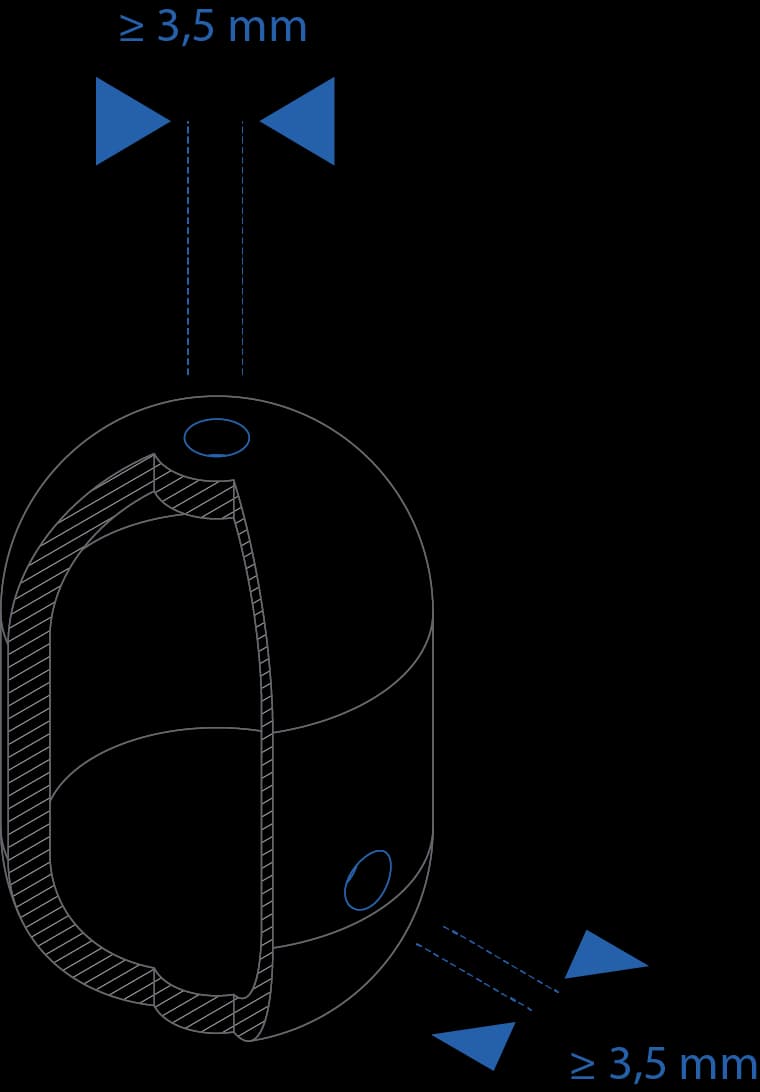
Escape holes

≥ 3.5 mm

Escape holes

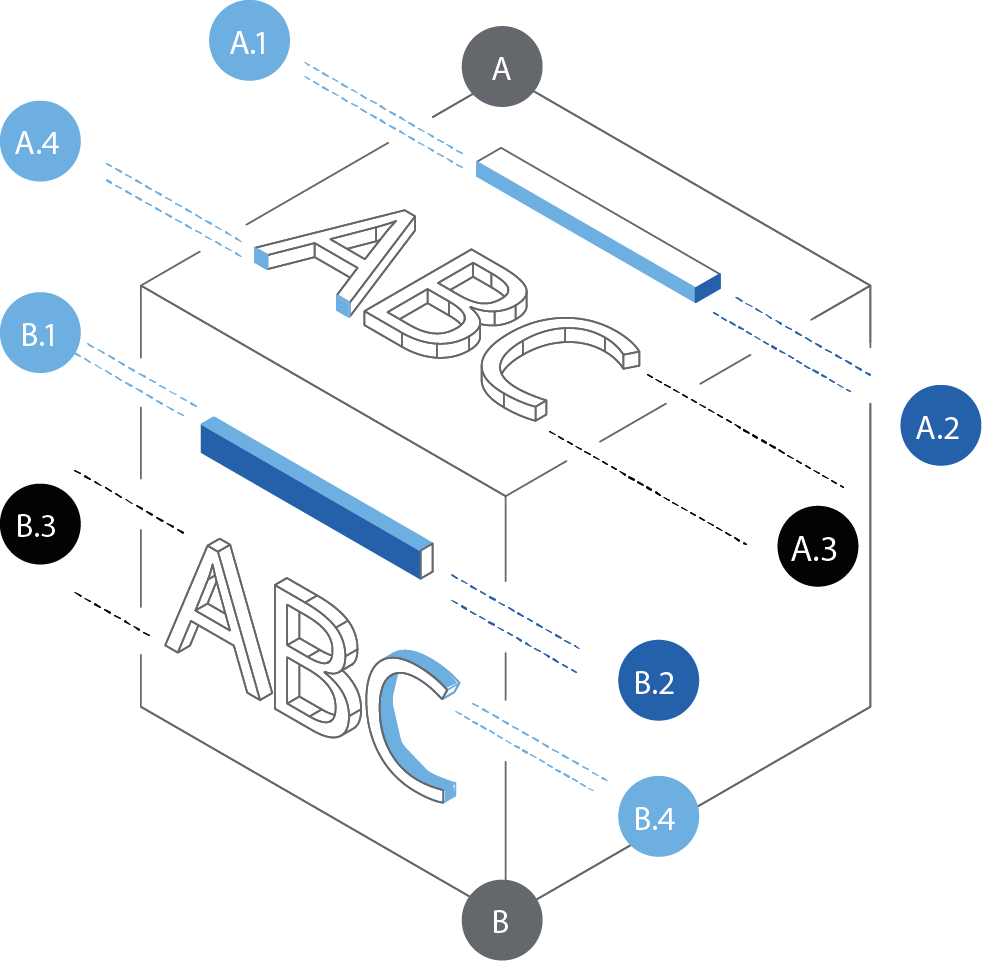
Minimum size of embossed features

A. Horizontal surfaces • B. Vertical surfaces

Minimum size of embossed features

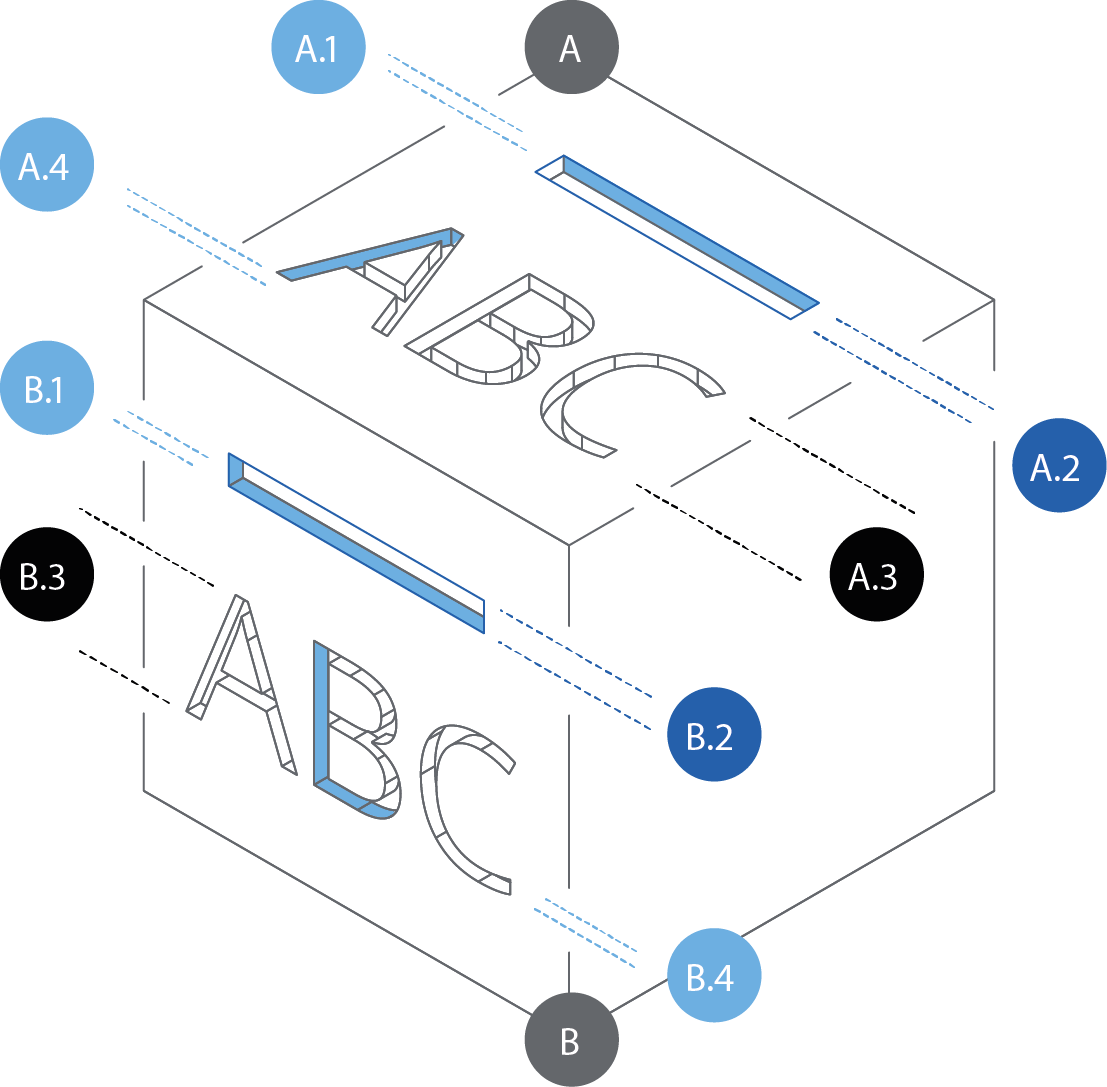
Minimum size of engraved features

A. Horizontal surfaces • B. Vertical surfaces

Minimum size of engraved features

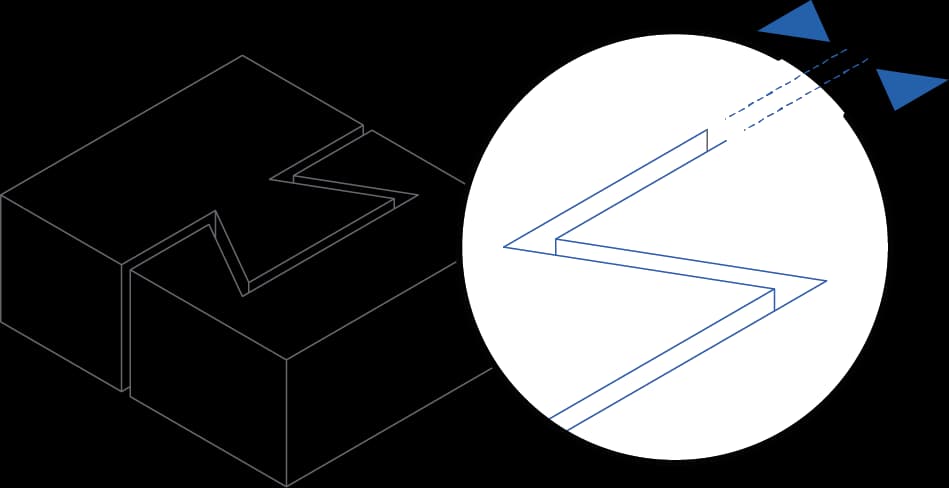
Minimum assembly tolerances

± 0.3 mm (standard)

Minimum assembly tolerances

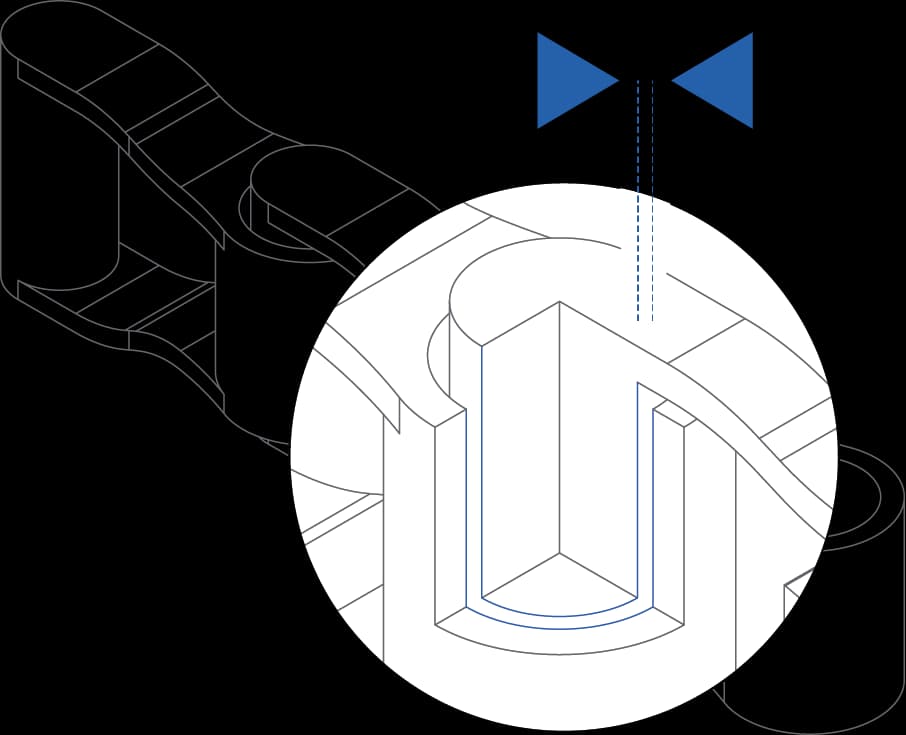
Clearance for integrated assemblies

0.2 – 0.6 mm

Clearance for integrated assemblies

Note: the following guidelines are indicative only and may vary depending on the material, the part geometry and the print parameters used. For specific projects or advanced technical requirements, we recommend contacting the Doppialinea technical department for personalised advice.

SLS quote

Calculate your quote online

PA12 and TPU powder — prototypes and custom production runs. Upload your file or email us for a technical review.

SLS technology guide

SLS 3D printing: functional prototypes and custom production runs in powder

SLS (Selective Laser Sintering) sinters thermoplastic powders with a laser: parts are built without supports, with good mechanical strength and geometric freedom. It is the go-to technology when a component has to be tested, assembled and reproduced in short runs.

At Doppialinea we produce in-house on Fuse machines with PA12 (standard and premium finish) and TPU 90A Shore, with bead blasting included and optional finishes on request.

At a glance

Materials
PA12 · TPU 90A
Build volume
165 × 165 × 300 mm
Tolerances
±0.3 mm / ±0.3%

When to choose SLS

It suits functional prototypes, lightweight tooling, housings, brackets and pilot batches of up to several hundred parts.

  • Complex geometries, cavities and undercuts without supports
  • Rigid parts in PA12 and elastic components in TPU
  • Repeatability across design revisions and custom production runs
  • Shorter lead times than tooling and conventional machining

Available materials

  • PA12 standard finish — balance of cost and strength
  • PA12 premium finish — more thorough bead blasting
  • TPU 90A — seals, clips, buttons, shock absorbers
  • Optional black dyeing on PA12 and TPU

CAD design

  • Preferred files: STEP, STP; we also accept STL
  • Recommended wall thickness ≥ 0.8 mm; functional holes ≥ 1 mm
  • Closed cavities: powder escape holes ≥ 3.5 mm
  • File check included before production

Workflow

  1. 1

    Upload your file

    STEP or STL in the online quote tool, with quantity and material.

  2. 2

    Technical review

    We check wall thicknesses, overall dimensions and build orientation.

  3. 3

    SLS production

    Printing, depowdering and industrial bead blasting in-house.

  4. 4

    Delivery

    Parts ready for testing, assembly or pre-production.

Frequently asked questions

SLS or FDM for my part?
SLS for robust parts, complex geometries and production runs in powder. FDM for large formats, quick iterations and engineering filaments at lower cost.
Which finishes are available?
Bead blasting is included in the base process. On request: black dyeing, painting and threaded inserts.

Calculate your SLS quote

Indicative price in a few minutes — PA12, TPU, quantities and lead times.

Go