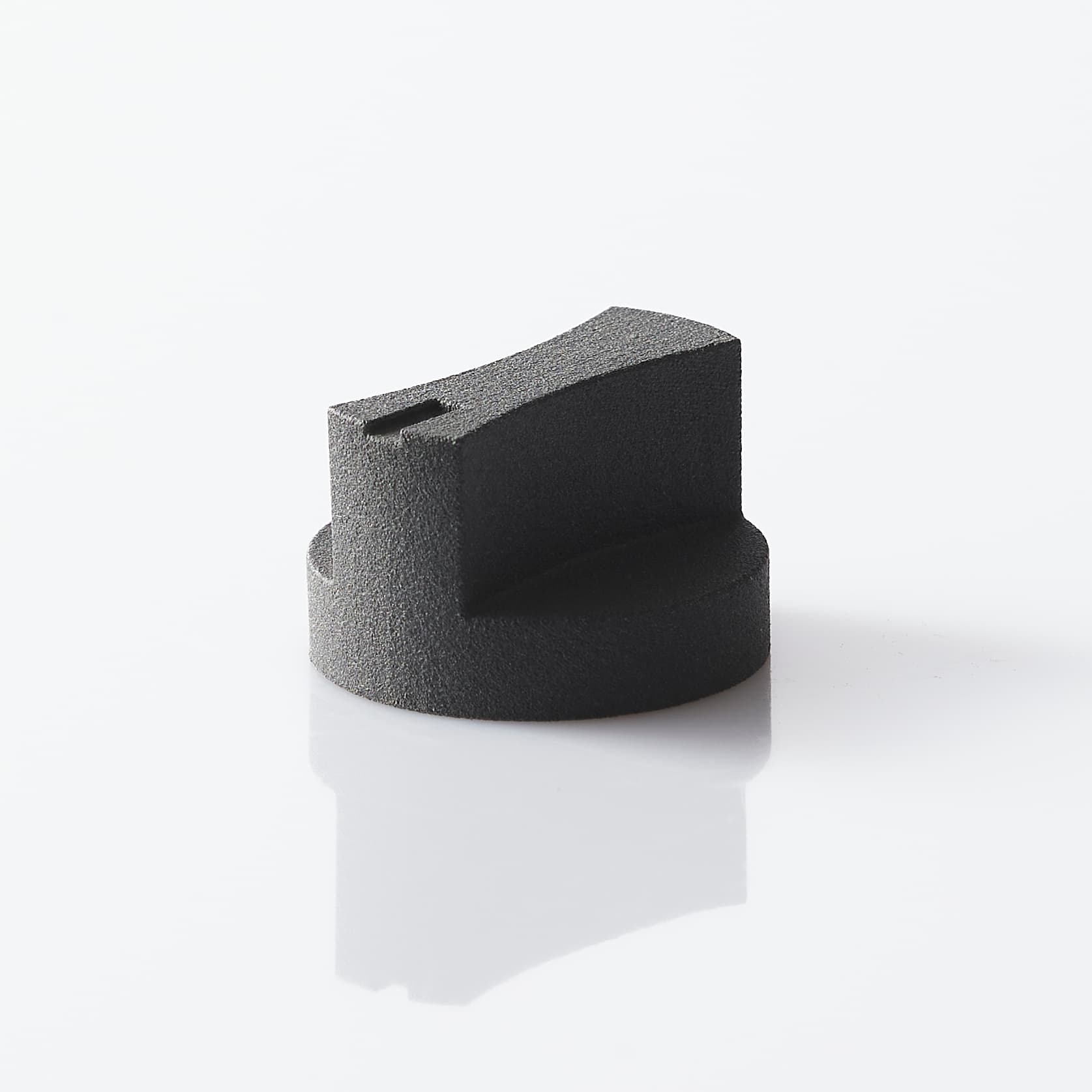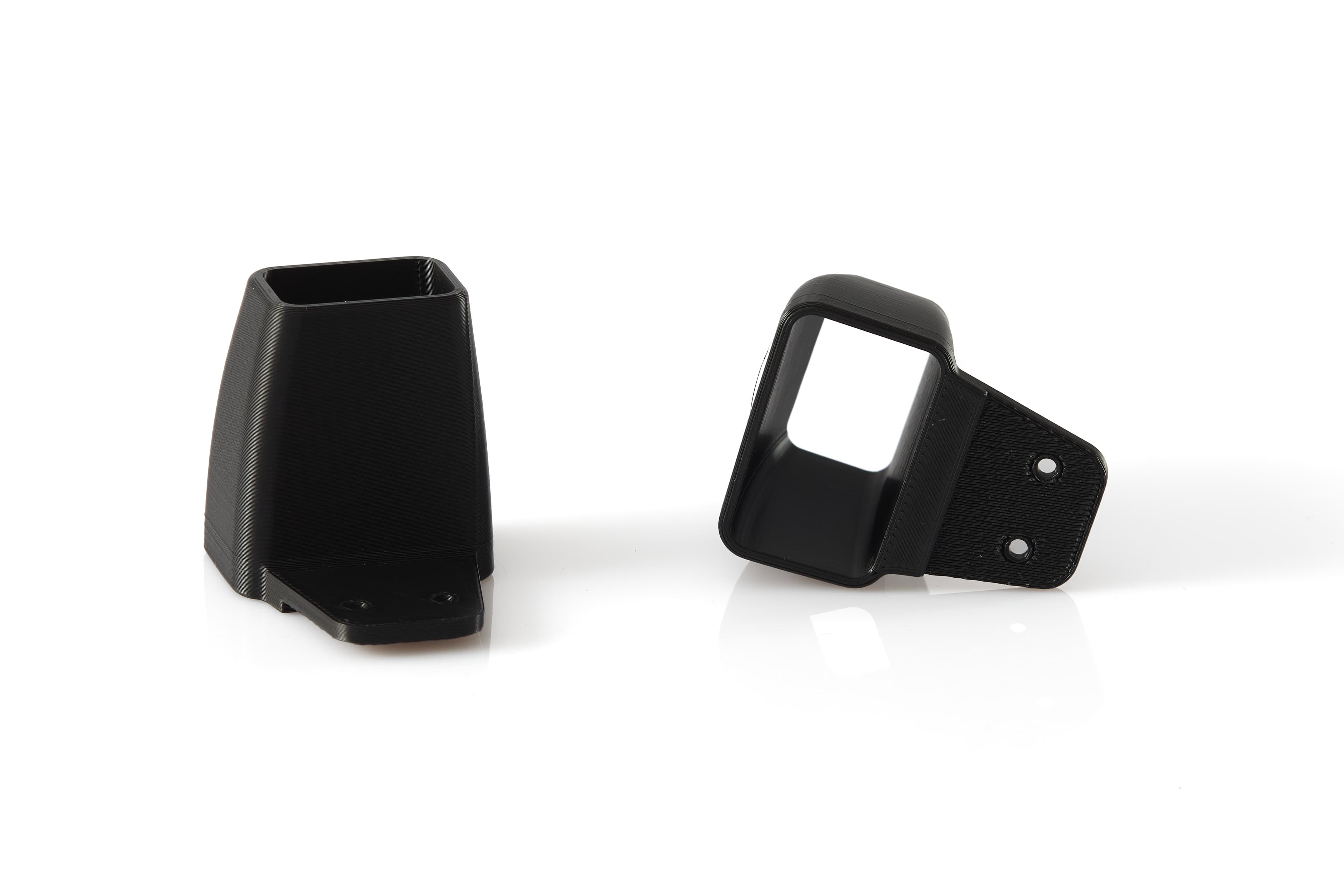
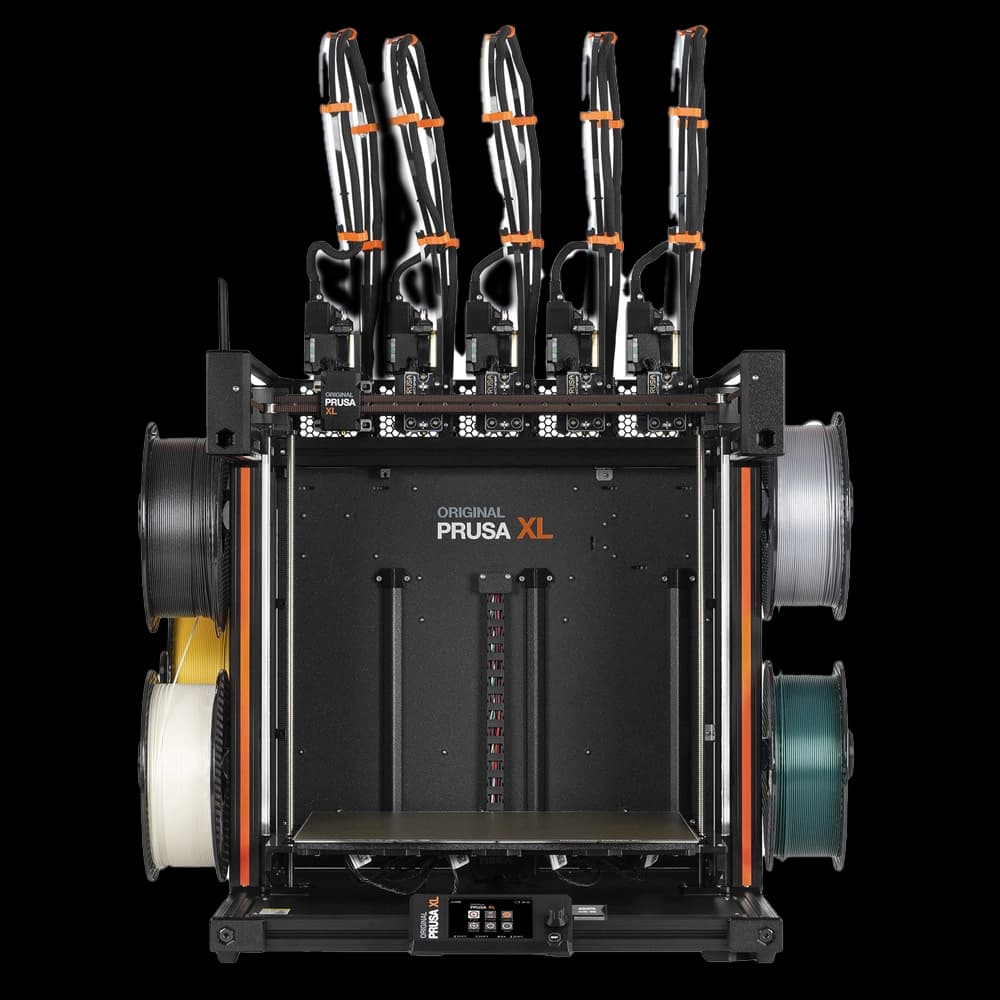
A part left outdoors has to withstand sun, rain and temperature swings. Many 3D printing materials perform well in the lab and fail after a few months outside: PLA, for example, has low resistance to UV and heat. For these applications, the go-to FDM material is ASA. Let's look at what it is, when to choose it and when something else is a better fit.
What is ASA?
ASA stands for acrylonitrile styrene acrylate. It is a close relative of ABS: the structure is similar, but in place of the butadiene component there is an acrylic elastomer. It is precisely this difference that makes it far more stable in sunlight. In practice ASA is used where you would otherwise use ABS, but the part has to live outdoors.
Strengths
UV stability
The datasheet for Prusament ASA, the reference we use, describes it as UV-stable and suitable for outdoor use: it does not yellow and retains its toughness over time. This is the main reason it is chosen.
Heat resistance
According to the same Prusament datasheet, the heat deflection temperature under load (HDT, ISO 75) is 93 °C at 0.45 MPa and 86 °C at 1.8 MPa. By comparison, the Prusament PLA datasheet gives 55 °C. This means an ASA bracket left in the sun, or near a moderate heat source, deforms far less.
Resistance to common agents
Prusament states good resistance to water, citric acid, antifreeze and detergents. For housings, covers and components that are washed or exposed to moisture, this is a real advantage.
If the part will be outdoors, the question to ask is not "how strong is it today", but "what will it be like after a season in the sun".
Limitations to be aware of
- Shrinkage and warping during printing. Like ABS, ASA tends to shrink as it cools. On large, flat parts this can lead to detachment from the bed or slight warping. You need an enclosed chamber and a well-thought-out geometry: rounded corners, no large thin flat surfaces.
- Solvents. The Prusament datasheet indicates that ASA dissolves in acetone. It should not be used in contact with solvents of this kind.
- Anisotropy. Like any FDM part, it is weaker between layers. The print orientation should be chosen according to how the load will act.
- Stiffness. Standard ASA is not the stiffest material in the catalogue. For highly stressed brackets, reinforced grades are needed.
Where it is used
Typical uses are parts exposed to the weather or to light:
- enclosures and boxes for electronics and sensors installed outdoors;
- brackets, clips and supports for façades, fences and installations;
- components for garden furniture, swimming pools and leisure boating;
- spare parts for vehicles and machines working in the open air;
- aesthetic prototypes that need to be tested in real conditions.
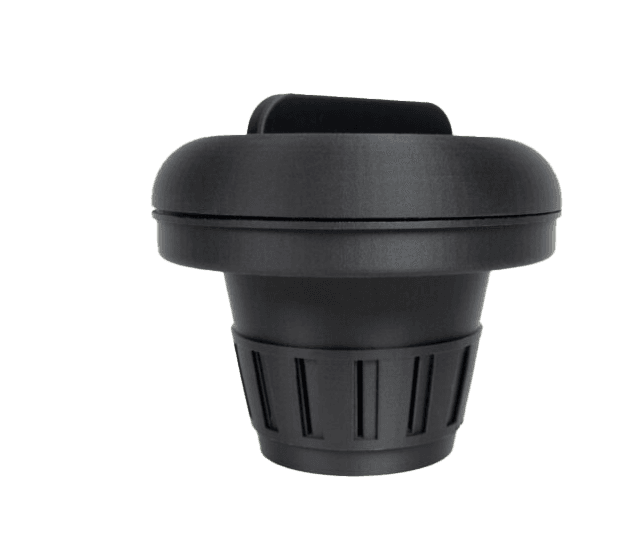
It is parts like this, working in contact with water and sun, that call for a material that stays stable over time.
ASA or an alternative?
ASA GF: when you need more stiffness
Our catalogue also includes ASA GF, reinforced with glass fibre. The reference is Spectrum ASA-X GF10, with 10% fibre: the Spectrum datasheet reports an HDT of 100 °C at 0.45 MPa and 90 °C at 1.8 MPa and a tensile modulus of 2550 MPa. It is the choice when the part has to stay outdoors and also flex very little under load.
ABS
Similar to process, but less UV-stable. Fine for indoor parts or parts protected from direct light.
PETG
Easier to print and resistant to moisture, but its heat resistance is lower than that of ASA. A good option for indoor or shaded parts with no high-temperature loads.
PC and PC-ABS
When you need more mechanical and thermal strength, polycarbonate and its blends step up a level. They are more demanding to print and are usually chosen for specific technical requirements, not for sun exposure alone.
For a quick comparison of properties you can use the Explore materials page, or ask the materials advisor, starting from how the part will be used.
Design tips for ASA
- Round off sharp edges: it reduces shrinkage stresses.
- Avoid long, thin walls without ribs.
- If the part is large, consider splitting it into pieces to be assembled.
- State in the order notes which face will be visible, so the part can be oriented for the best surface.
- For threads that are fitted and removed often, plan for threaded inserts.
In summary
ASA is the FDM material to choose when a part has to stay outdoors: stable in sunlight, water-resistant and with heat resistance clearly superior to PLA. It requires care in printing and design, and for higher loads there is the glass-fibre version. You will find all the available materials on the FDM 3D printing page.
Do you have a part for outdoor use? Upload the file to the online quote tool and select ASA or ASA GF to see the price.
Frequently asked questions
Yes. The Prusament datasheet describes it as UV-stable and suitable for outdoor use: it does not yellow and retains its toughness over time.
They are processed in a similar way, but ASA uses an acrylic elastomer in place of butadiene and is far more stable in sunlight. ABS is mainly suited to indoor parts.
When the outdoor part also needs to be stiffer: glass fibre increases the modulus and heat resistance, as reported in the Spectrum ASA-X GF10 datasheet.