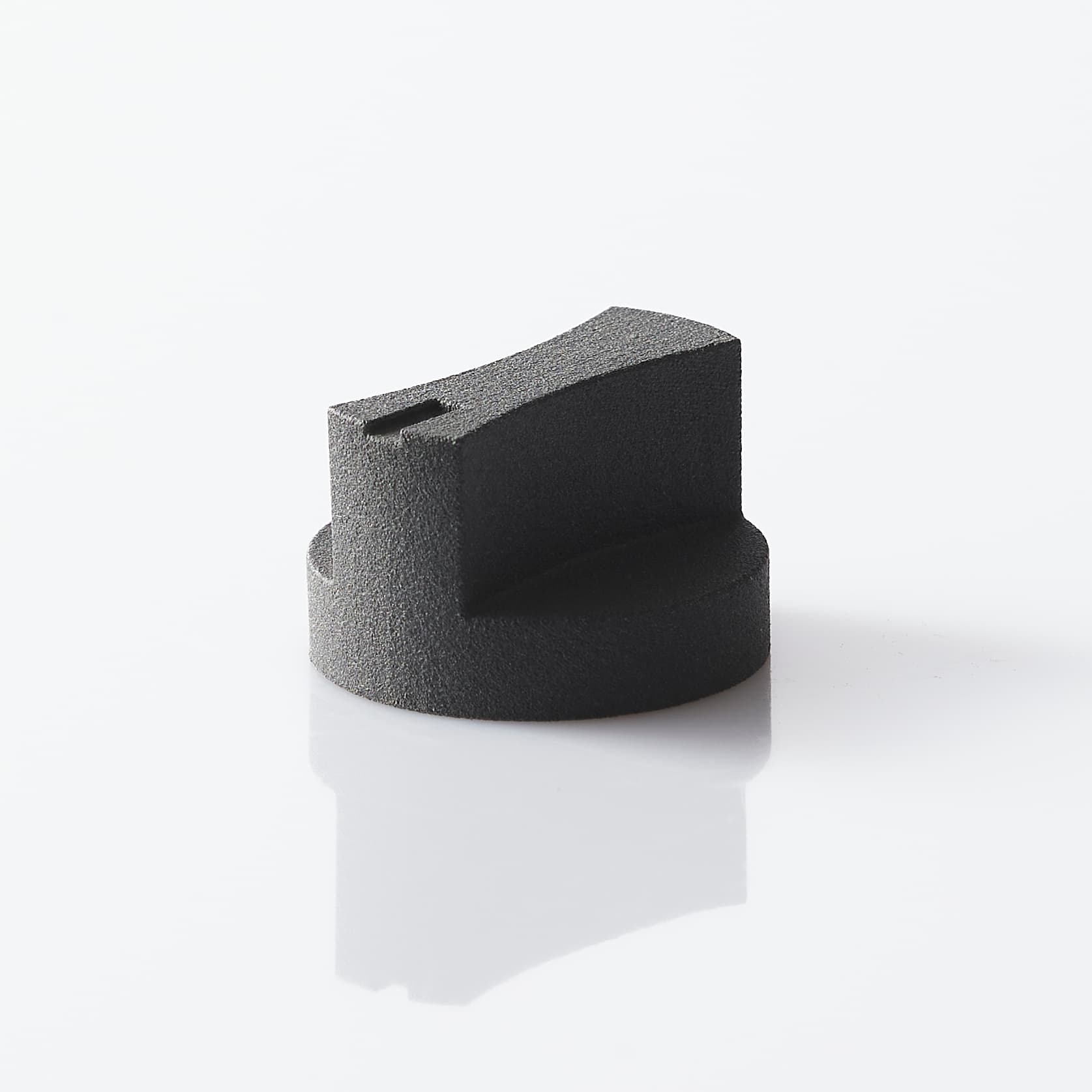
A cracked knob, a gear with two broken teeth, a ring nut that is no longer in the catalogue. Often the part costs very little, but the machine sits idle because the original spare is no longer available or takes weeks to arrive. In these cases 3D printing is a practical route: you start from the broken part or a drawing and produce even a single piece, with no moulds.
Let's look at which spare parts suit this approach, how to get from the broken part to the file, and which technology to choose.
Which spare parts can be printed
The best candidates are plastic components of machines, equipment and plant:
- control knobs, handles and levers;
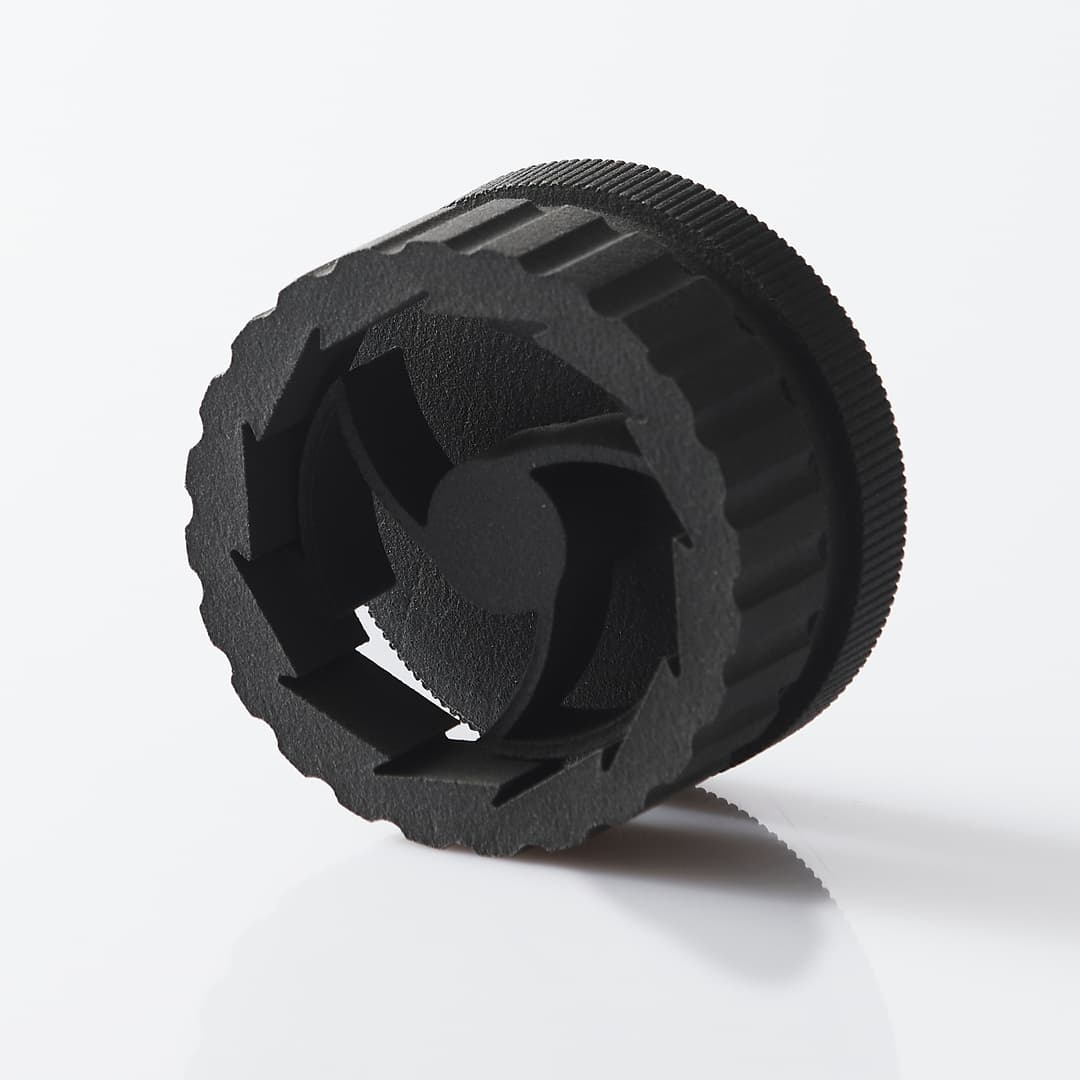
- ring nuts, bushes and spacers;
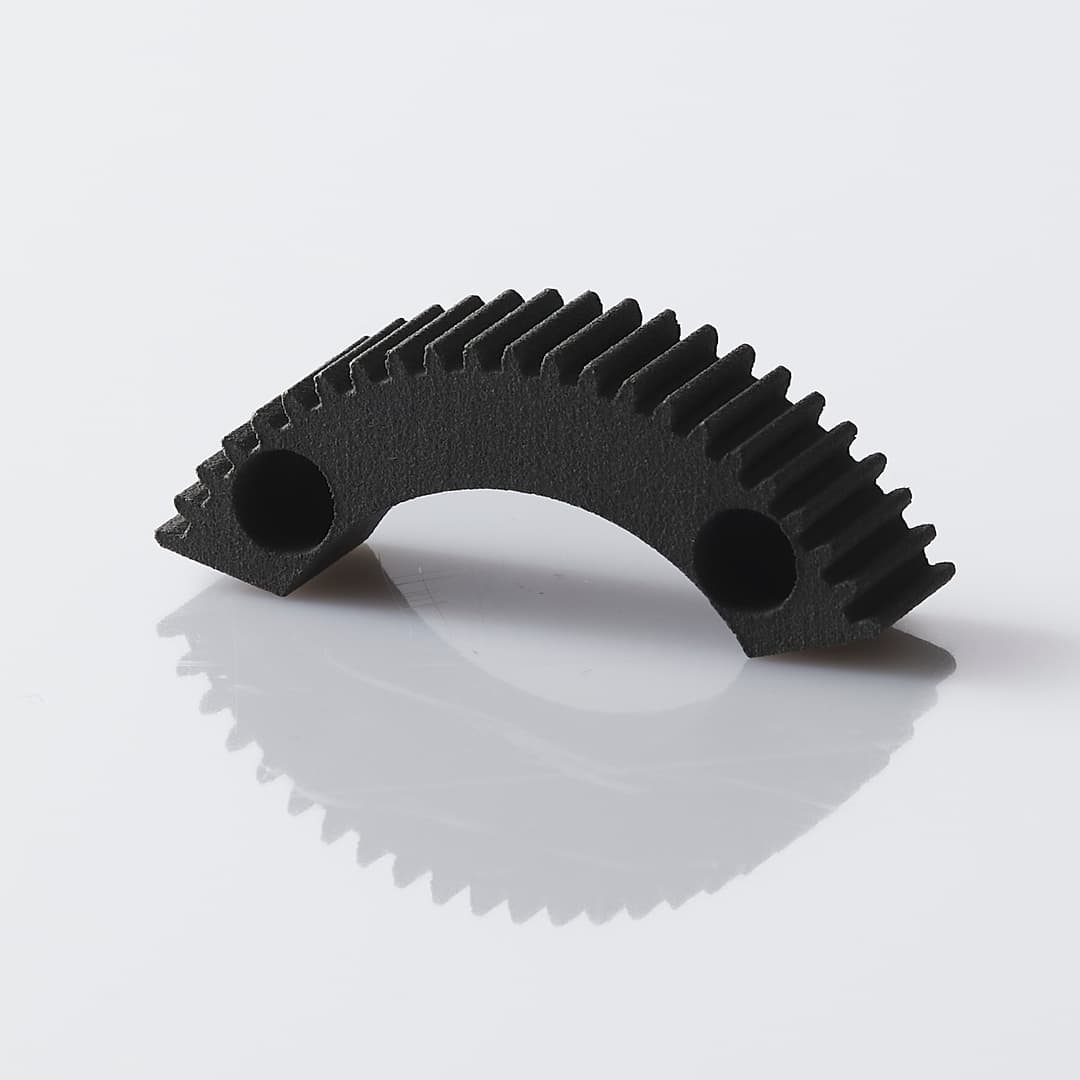
- gears and gear sectors working under moderate loads;
- clips, hooks and catches that break during disassembly;
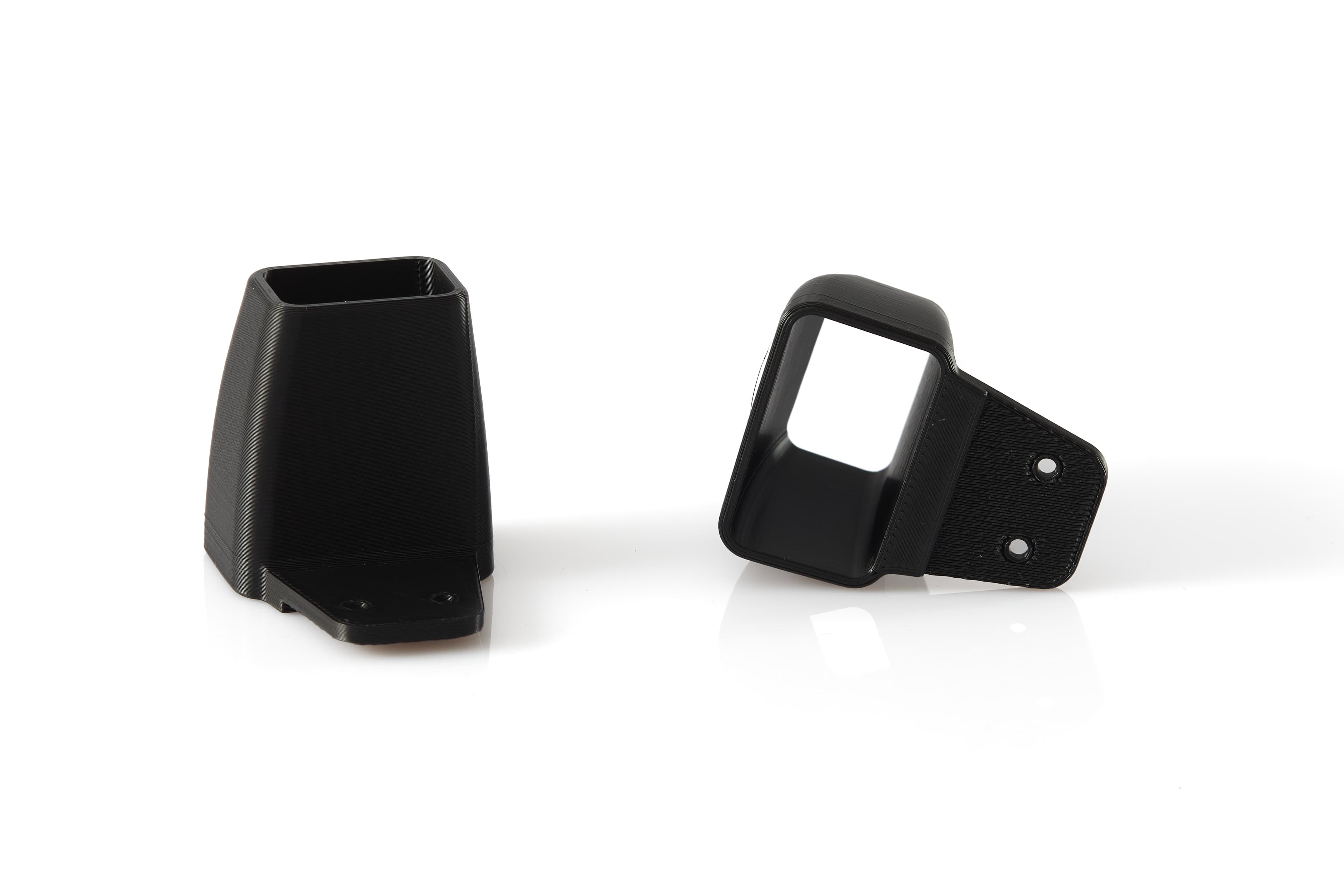
- housings, covers and doors for panels and machinery;
- seals and elastic buffers, when a soft material is needed.
The rule of thumb is simple: if the original part was plastic and did not work in extreme conditions, there is almost always a suitable printable material. If the original was metal and carries heavy loads, 3D printing can still help, but as a temporary solution or after careful checks.
From the broken part to the 3D file
To print you need a 3D model. There are three ways to get one.
The file already exists
If you have the original CAD drawing, in STEP or STL format, that is the ideal situation. We check that the model is complete and move on to choosing the material.
Redrawing from measurements
For parts with simple geometry, such as ring nuts, spacers or bushes, a calliper and a drawing rebuilt in CAD are enough. It is worth measuring the mating parts too: a shaft, a seat, a fixing hole. Those dimensions decide whether the part will fit first time.
Reverse engineering
For complex shapes or curved surfaces you can start from a 3D scan of the broken part and then rebuild the model. If the spare is broken in pieces, the fragments are reassembled, or an intact twin part is used if there is one on the same machine. If you don't have the file, our consulting and design service starts right here.
Don't just copy the broken part: understand why it broke. A printed spare is often a chance to reinforce the weak point.
Which technology to choose
SLS: the benchmark for functional spare parts
In SLS the part is built in a powder bed, without supports. PA12 gives strong parts with good wear resistance and fairly uniform behaviour in all directions. It is the typical choice for gears, ring nuts, clips and components with internal geometries. TPU 90A in SLS covers buffers, buttons and parts that need to flex. You will find the details on the SLS 3D printing page.
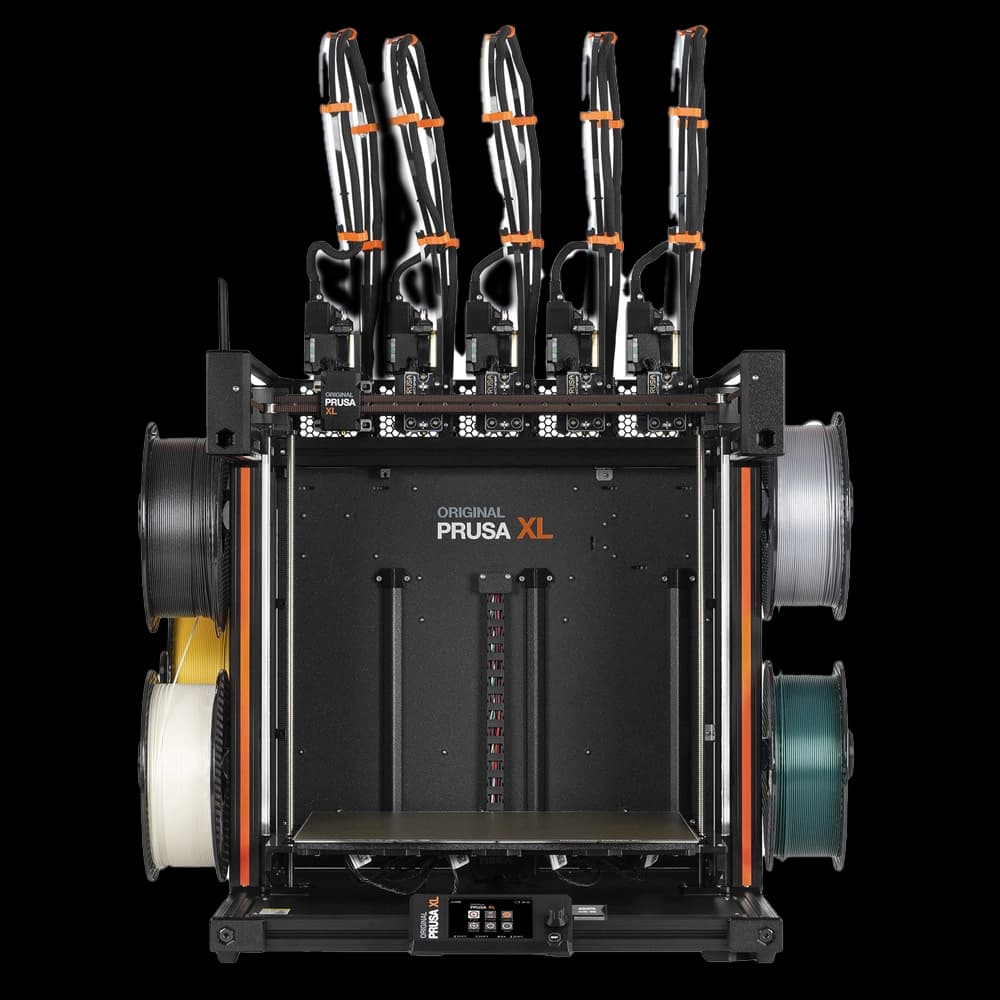
FDM: large parts and engineering materials
FDM is useful for larger spare parts, such as housings and covers, and when a specific material is needed: ASA for outdoor use, PC or PC-ABS for greater heat resistance, fibre-reinforced nylons such as PA6-CF or PA12-CF for rigid parts, and ABS FR V0 where a self-extinguishing material is required. The limitation to remember is anisotropy: the part is weaker between layers, so the print orientation should be chosen according to the load.
MSLA: fine details
Resin suits small spare parts with very fine details or smooth surfaces, such as bezels, small covers or instrument components. For parts subject to impact or repeated loads, a tough resin or SLS is better.
What to check before ordering
- Operating temperature. A spare near a motor or a heating element needs a material that can withstand heat: PLA, for example, is not suitable.
- Contact with oils, detergents or water. Always say so: it changes the choice of material.
- Mating features. Shaft holes, bearing seats and threads may need machining afterwards or metal threaded inserts.
- Wear. Gears and bushes that rub against other parts wear out: consider whether to keep a stock of spares.
- Safety. If the part has a safety function or is subject to specific regulations, the choice should be assessed with whoever is responsible for the machine.
The real advantage: no warehouse
With 3D printing the spare part becomes a file. Once the first part has been validated, you can reprint it whenever you need, even years later, with no physical stock and no minimum order. For parts that are out of production, it is often the only alternative to redesigning an entire machine assembly.
In summary
Plastic knobs, ring nuts, gears, clips and housings are excellent candidates for 3D printing. You need a reliable file, a technology suited to the type of stress, and a few checks on temperature, environment and mating features. For functional spare parts, PA12 in SLS is the starting point; FDM comes into play for large parts or specific engineering materials.
Already have the file for your spare part? Upload it to the online quote tool and compare technologies and materials.
Frequently asked questions
Yes. Simple parts are redrawn from measurements; for complex shapes you start from a 3D scan of the part and rebuild the model with a design service.
For functional spare parts the benchmark is SLS PA12, which is strong and wear-resistant. In FDM you can use fibre-reinforced nylons such as PA6-CF or PA12-CF when more stiffness is needed.
It depends on the loads. For heavily stressed metal parts, plastic 3D printing should be assessed case by case and is often a temporary solution.