A component to be tested within a week, a bracket with complex internal geometry, a pre-series of 40 parts before investing in tooling: these are cases where understanding when to use 3D printing directly changes time, cost and project risk. It is not about replacing every production process with additive. It is about choosing the process best suited to the function of the part, the volume required and the stage the product is at.
For a technical office, professional 3D printing is a digital manufacturing tool: from the CAD file to the component ready for testing, validation or use. The advantage is not only speed. It is the ability to produce without moulds, change a geometry between one batch and the next and concentrate the cost on the part rather than on tooling.
When to use 3D printing: the cases where it creates value
3D printing is particularly effective when the time needed to set up a traditional process weighs more than the time to produce the part. This happens in product development, in R&D and in low-to-medium-volume supply, but also in the production of customised end components.
The first case is functional prototyping. If the part has to verify envelope, assembly, mechanical strength or behaviour in service, an aesthetic model is not enough. You need material, technology and print orientation consistent with the planned test. A PA12 prototype made by SLS, for example, can be suitable for assembly and functional checks; an MSLA resin may be more appropriate when surface detail and the precision of small features are decisive.
The second case is the pre-series. Before moving to injection moulding, dedicated CNC machining or other processes with high fixed costs, producing an initial batch makes it possible to collect real data. You verify the assembly sequence, test tolerances against purchased components, carry out field tests and reduce late changes. A geometry that is correct in CAD is not automatically producible or reliable in real use.
The third case concerns low-volume end parts. Test fixtures, jigs, sensor mounts, technical guards, enclosures, grips, ducts, laboratory devices and non-standard spare parts are natural candidates. If demand is variable, if each order requires different dimensions or if the product is intended for a specific plant, avoiding moulds and minimum order quantities can make additive the most rational choice.
3D printing is also useful when the geometry improves the function. Internal channels, structural lightweighting, lattices, conformal walls and the consolidation of several components into one part can reduce assemblies, weight and points of failure. The benefit, however, must be assessed on the complete component: a more advanced shape must remain inspectable, assemblable and consistent with the required tolerances.
Volume, cost and time: the threshold is not the same for everyone
There is no universal number of parts beyond which 3D printing stops being economical. The threshold depends on size, material, technology, post-processing, aesthetic requirements and the cost of the alternative tooling. A small complex component can remain suited to additive even for hundreds of units. A very simple element repeated thousands of times, on the other hand, tends to favour traditional processes.
The right comparison is not between unit price and unit price. You need to include the cost and lead time of moulds, tooling, programming, procurement, initial scrap and design revisions. For a pre-series, a solution that appears more expensive per part can cost less at project level if it allows the design to be validated without waiting weeks.
The time factor also needs careful reading. 3D printing shortens the time between file and physical part, but it does not eliminate technical activities. File checking, orientation, supports where necessary, washing, curing, depowdering, finishing and dimensional inspection all affect the result. An urgent request works well when specifications, files and priorities are defined from the outset.
Choosing the technology according to the function of the part
The question should not be "which is the best 3D printer?", but "which technology produces the required component with the necessary level of quality?". SLS, MSLA and FDM are not equivalent: they meet different needs.
SLS for engineering polymer parts
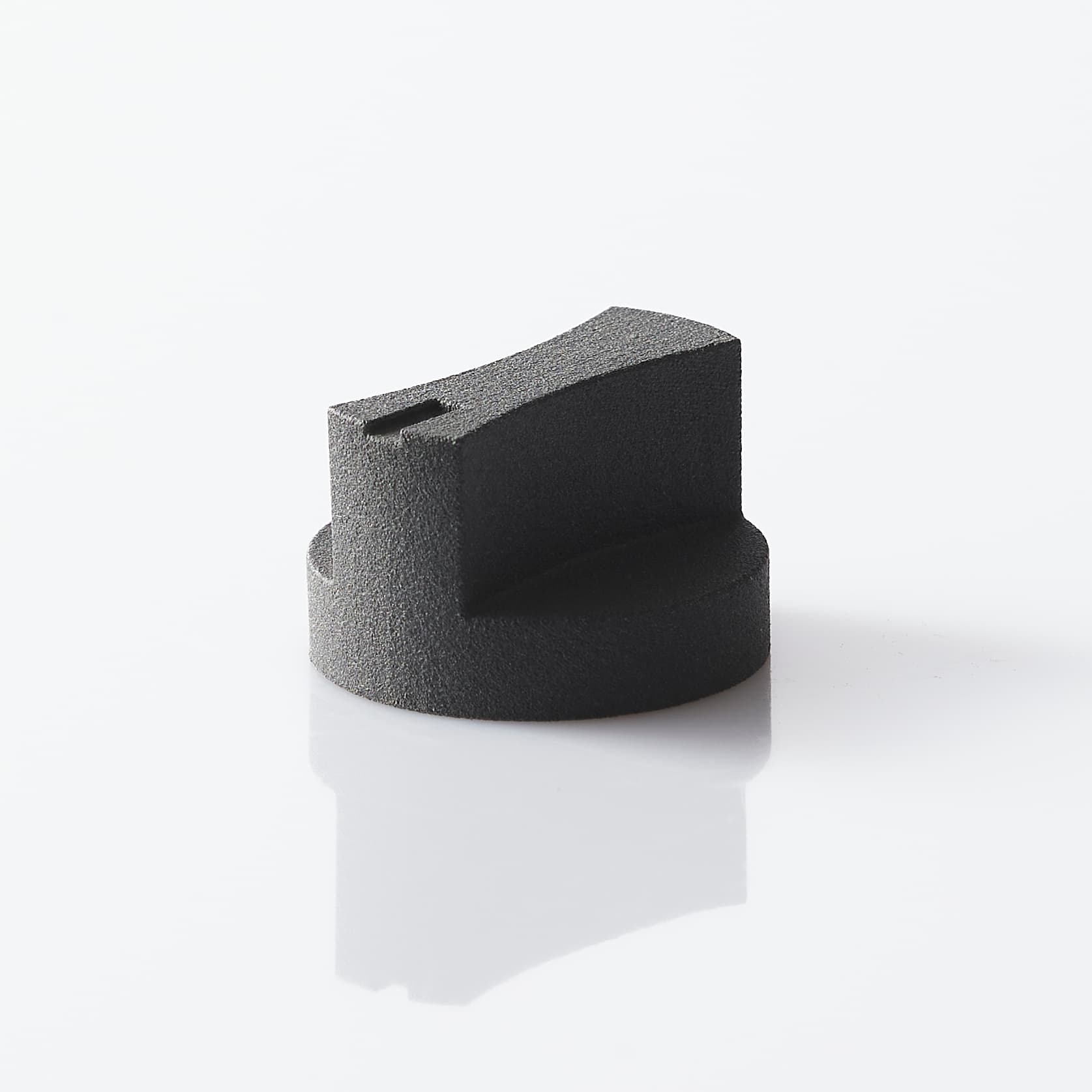
Selective laser sintering is suited to PA12 and TPU components that require good geometric freedom, no support structures on the part and mechanical properties suitable for many functional applications. It is an effective technology for shells, clips, brackets, assembly components, ducts and small runs. The natural finish can have a slightly grainy surface, which can be improved with dyeing and specific treatments.
For a designer, the main advantage is being able to make complex shapes and several parts in the same build without redesigning tooling. Tolerances, mating features and potential deformation on very large geometries or those with thin walls remain to be managed.
MSLA for detail and precision
MSLA printing uses photopolymer resins and is suited to components with fine details, accurate surfaces, small text, textures and precision geometries. It can be used for master models, aesthetic-functional prototypes, design parts and selected technical applications, depending on the resin.
The choice of resin is central. Stiffness, heat resistance, impact behaviour and stability over time change significantly from one formulation to another. A very precise part made with a resin unsuited to its operating environment is not a reliable prototype: it is only a good geometric representation.
FDM for quick checks and practical components
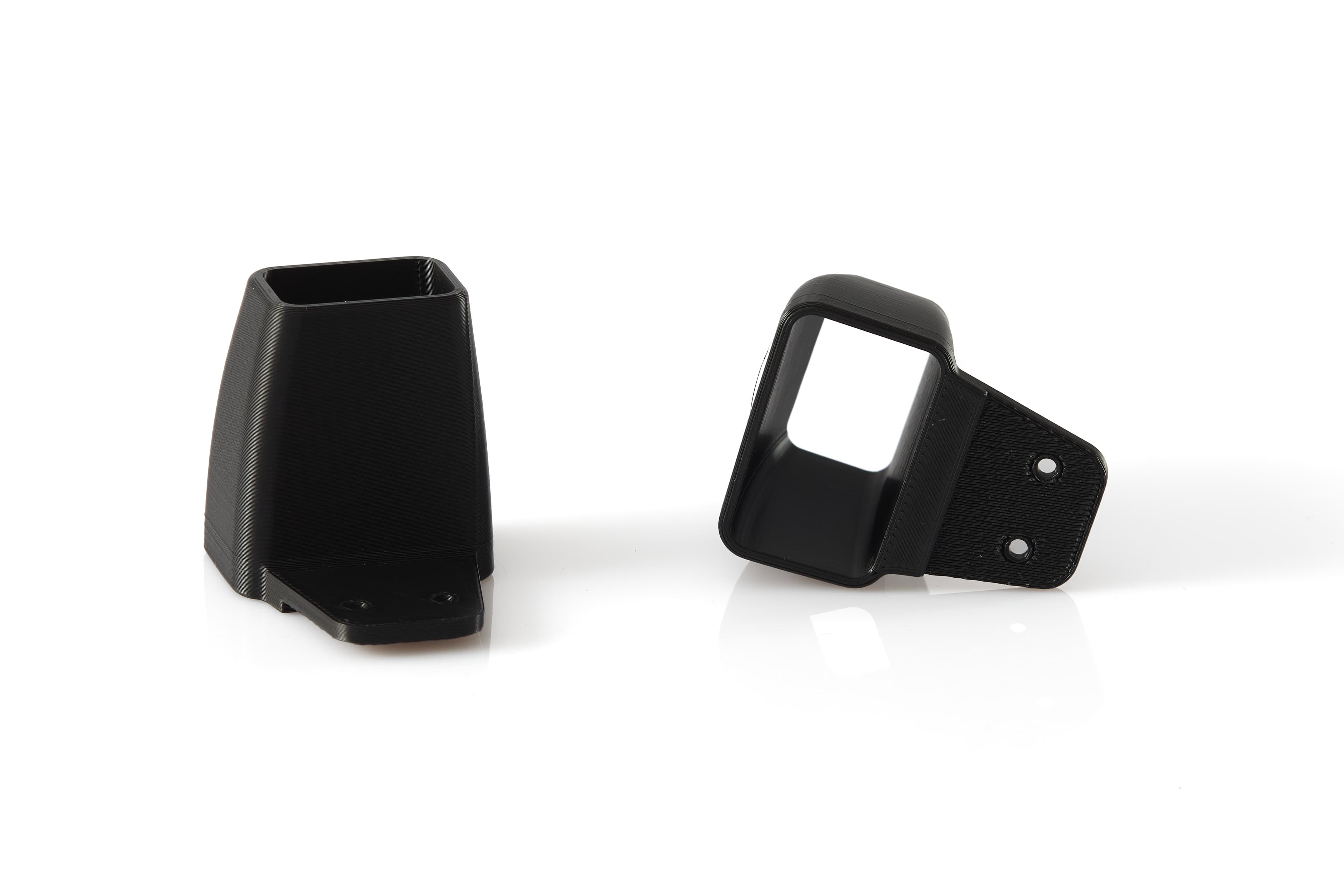
FDM is often suited to fast prototypes, jigs, tooling and larger parts, when surface finish is not the priority requirement. Material, orientation and infill percentage affect performance. For this reason it is not correct to judge an FDM part only by the look of its layers: you need to know the load, the direction of the stress and the conditions of use.
The limits to assess before confirming an order
Additive is not the best choice when the component requires extremely tight tolerances on all surfaces, mirror finishes without subsequent machining, or large volumes stable for years. In these cases, CNC, moulding or a hybrid process can offer more competitive results.
Critical dimensions deserve dedicated handling. Calibrated holes, bearing seats, threads, sealing faces and sliding fits can require a machining allowance, inserts, mechanical finishing or a revision of the geometry. Simply stating a tolerance on the drawing does not automatically make that dimension achievable with every technology and every print orientation.
The environment of use must also be defined. Temperature, UV, humidity, detergents, technical fluids, cyclic loads and electrical requirements guide the choice of material. A mount installed in an air-conditioned laboratory does not have the same requirements as a part near a motor, exposed outdoors or subject to repeated flexing.
From CAD file to finished part: the information that speeds up production
A STEP file is preferable when in-depth technical checks or manufacturability assessments are planned; a well-exported STL can be enough for many jobs. In both cases, the quote is faster and more reliable if accompanied by operational information: quantity, desired material, function of the component, critical dimensions, finish required and delivery date.
When the part has to be identified, tracked or personalised, laser marking can complete the process with codes, numbering, technical logos or assembly references. It is an apparently minor detail that avoids additional labels and makes the management of batches, spare parts and installed components more orderly.
A professional service provider should not simply receive a file and start a machine. The technical check before production is there to catch walls that are too thin, closed volumes, details that cannot be reproduced, inconsistent tolerances and finishes that can alter dimensions. Doppialinea works in this spirit: a single point of contact, in-house production and process control from file to finished part.
The most effective choice starts from a simple question: does this component have to validate an idea, solve an operational need or support repeatable production? Once the function is defined, 3D printing stops being a generic technology and becomes a measurable production decision.